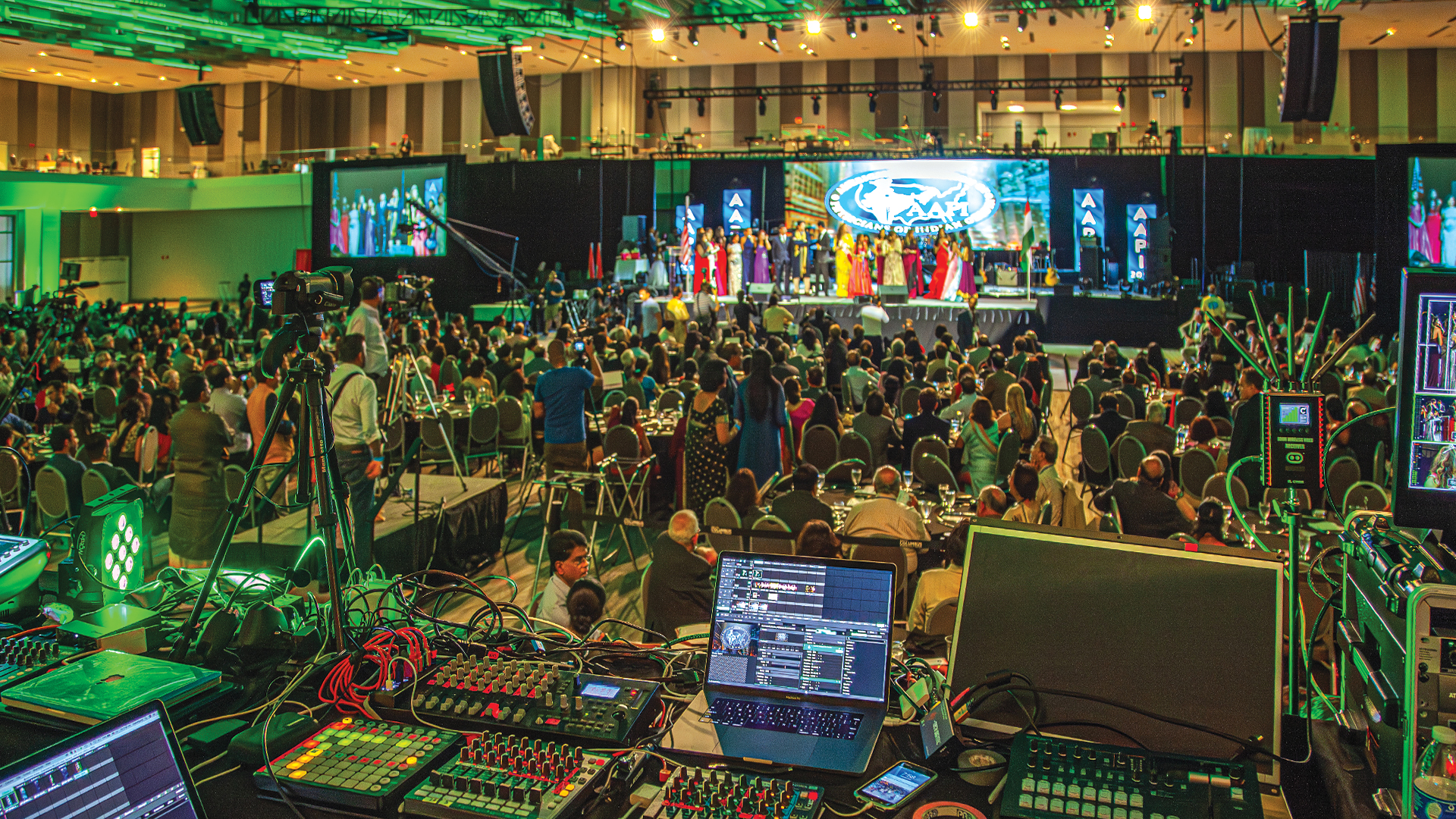
The system engineer stood at the FOH position watching clouds build on the horizon, smartphone in one hand displaying weather radar, Smaart analysis running on the laptop in front of him. He wasn’t worried about the sound system—the d&b audiotechnik SL-Series was performing beautifully. He was worried about what would happen to that carefully tuned system when the humidity spiked forty percent in the next hour. Every outdoor audio professional eventually learns: understanding weather isn’t optional—it’s survival.
The Atmosphere as Audio Variable
Sound travels through air, and air is anything but constant. Temperature, humidity, barometric pressure, and wind velocity all affect how audio waves propagate from speaker to ear. The speed of sound itself changes: roughly 1,130 feet per second at 70°F becomes 1,160 feet per second at 90°F. Those thirty feet per second matter when you’re trying to time-align speaker arrays across a festival field.
The pioneers of outdoor sound reinforcement learned these lessons through painful experience. Bill Hanley at Woodstock documented how atmospheric conditions transformed his carefully designed coverage patterns into acoustic chaos as weather changed throughout the festival. The technology has evolved dramatically since 1969, but the physics remains unchanged: the atmosphere is a continuously variable medium that sound must navigate.
Humidity: The Invisible Absorber
High-frequency sound attenuates faster in dry air than humid air—a counterintuitive fact that catches many audio engineers off guard. At 20% relative humidity, a 10kHz tone loses significantly more energy over distance than the same tone at 80% humidity. This means a sound system tuned during dry afternoon soundcheck might sound dramatically different during a humid evening performance.
The Meyer Sound Compass software and similar system optimization tools include humidity compensation algorithms for exactly this reason. A system technician at a multi-day festival might adjust HF equalization multiple times daily as humidity fluctuates. The difference between crisp, articulate vocals and muddy, dull reproduction can be entirely atmospheric.
Temperature Gradients and Sonic Bending
Temperature doesn’t just change sound speed—it can bend sound paths entirely. When warm air overlays cool air (a temperature inversion), sound waves refract downward, potentially increasing coverage at distance while creating unpredictable hot spots. When cool air overlays warm air (normal daytime conditions), sound refracts upward, reducing ground-level coverage as distance increases.
Festival audio crews have learned to anticipate these patterns. Late afternoon often produces the most challenging conditions as ground-level cooling creates temperature layers that shift coverage patterns rapidly. The production manager asking why the sound is different at 6 PM versus 3 PM isn’t imagining things—the atmosphere literally changed how waves travel.
Wind: The Coverage Destroyer
Wind affects outdoor audio systems in multiple ways. The most obvious is physical: microphones exposed to wind produce rumble and handling noise that no amount of high-pass filtering fully eliminates. Windscreens and pop filters help, but severe wind can render outdoor vocal capture essentially impossible.
Less obviously, wind creates acoustic shadows and coverage shifts. Sound traveling upwind attenuates faster than sound traveling downwind. A speaker array aimed across a windy field might provide significantly different SPL levels depending on wind direction. The L-Acoustics Soundvision modeling software includes wind compensation parameters, but modeling only approximates what actually happens when variable gusts interact with complex array geometries.
Weather Apps and Professional Paranoia
Every experienced outdoor audio engineer develops a relationship with weather forecasting that borders on obsessive. The smartphone becomes a meteorological command center: Dark Sky for hyper-local precipitation forecasts, Windy for detailed wind prediction, and radar applications that show storm cell movement in real time. The festival system tech checking weather apps every fifteen minutes isn’t neurotic—they’re professionally responsible.
Some productions invest in dedicated on-site weather monitoring. Portable weather stations positioned around a festival site can detect microclimatic variations that regional forecasts miss. A temperature difference of even a few degrees between stage location and audience areas affects sound propagation. The DTN weather services used by major touring productions provide site-specific forecasts that generic weather apps cannot match.
The Soundcheck That Means Nothing
A familiar frustration for FOH engineers: spending hours dialing in a perfect system EQ during afternoon soundcheck, only to discover at showtime that atmospheric changes have rendered those settings useless. The sun has set, temperature has dropped fifteen degrees, humidity has risen, and the PA system sounds like a different rig entirely.
The solution isn’t avoiding soundcheck but understanding its limitations. Experienced engineers document not just their settings but the conditions under which those settings worked. A show file might include multiple EQ snapshots labeled “dry/hot,” “humid/cool,” and variations between. The Yamaha RIVAGE PM series and similar digital consoles make storing these variations straightforward; the skill is knowing when to recall them.
Storm Protocols and Safety Decisions
Weather monitoring isn’t just about audio quality—it’s about safety. Lightning within ten miles of an outdoor venue requires evacuation under most safety protocols. High winds can make rigged equipment dangerous. Heavy rain creates electrical hazards and can damage equipment not rated for exposure.
The production safety officer role, increasingly common at major festivals, includes weather monitoring as a primary responsibility. Tools like Thor Guard lightning detection systems provide early warning that allows orderly evacuation rather than panic. The decision to stop a show or delay doors falls to this role, removing the financial pressure that might otherwise influence judgment.
Waterproofing Realities
No professional audio equipment is truly waterproof, regardless of marketing claims. IP ratings indicate resistance to moisture intrusion under specific test conditions, but sustained rain exposure exceeds what most equipment can handle. The Meyer Sound LEO arrays used for stadium shows feature weather-resistant enclosures, but the manufacturer still recommends covering them during extended rain.
The tarping ritual at outdoor events has become a choreographed routine. Crews know which equipment gets covered first (consoles and amplifier racks), which can tolerate brief exposure (most speaker enclosures), and which must be protected immediately (microphones and processing equipment). A well-drilled crew can tarp a festival stage in under five minutes—time that can make the difference between salvageable equipment and expensive repairs.
The Evening Transition Phenomenon
Sunset at outdoor venues creates a predictable pattern of atmospheric change that experienced engineers learn to anticipate. As ground temperatures drop, the temperature gradient shifts, often improving long-throw coverage as sound stops refracting upward. Humidity typically rises. Wind often calms. The combined effect can make evening shows sound significantly different from afternoon performances.
Smart system design accounts for this transition. The delay towers positioned for afternoon coverage might need timing adjustments as conditions change. The subwoofer array pattern might shift as ground-level temperature gradients evolve. The system engineer who walked away after soundcheck returns at sunset to verify that the system still performs as intended.
Multi-Day Festival Challenges
Festivals spanning multiple days amplify weather challenges. The audio system must perform consistently despite potentially dramatic weather variation between days. The crew that tuned the PA on a dry Friday might face humid Saturday and rainy Sunday. Equipment fatigue compounds—moisture accumulates in enclosures, connectors oxidize, cables stiffen.
The maintenance protocol for multi-day events includes weather-specific checks. Every morning begins with connector inspection, looking for moisture damage or corrosion. Amplifier thermal readings are compared against baselines to detect cooling issues. Cable runs are checked for damage from foot traffic through muddy conditions. The festival audio department essentially performs triage between sets.
Training the Next Generation
Formal audio education rarely includes atmospheric acoustics in any depth. Engineers learn these principles through field experience—sometimes painful experience when a storm destroys a day’s work or humidity renders a soundcheck useless. The knowledge transfer happens through mentorship, war stories, and the accumulated wisdom of crews who’ve worked enough outdoor shows to recognize patterns.
Some production companies have formalized this training. Clair Global and Eighth Day Sound invest in educating their system technicians about environmental factors affecting audio. The SynAudCon seminars include modules on outdoor sound propagation. But nothing substitutes for standing at FOH during a weather event, feeling the sound change in real time, and learning to respond.
The veteran audio engineer watching clouds build on the horizon has learned something beyond technical specifications: humility. The atmosphere doesn’t care about their careful calculations or expensive equipment. It will do what physics dictates, and the audio professional’s job is to anticipate, adapt, and accept that sometimes the weather wins. The best engineers aren’t those who’ve never been defeated by weather—they’re those who’ve learned from every defeat to be better prepared for the next battle.
Keywords: system engineer, FOH position, Smaart analysis, d&b audiotechnik SL-Series, audio professional, temperature, humidity, barometric pressure, wind velocity, outdoor sound reinforcement, Bill Hanley, audio engineers, sound system, Meyer Sound Compass software, system optimization tools, system technician, HF equalization, temperature inversion, audio crews, production manager, outdoor audio systems, high-pass filtering, windscreens, pop filters, speaker array, L-Acoustics Soundvision, outdoor audio engineer, Dark Sky, Windy, festival system tech, on-site weather monitoring, portable weather stations, DTN weather services, FOH engineers, system EQ, PA system, show file, EQ snapshots, Yamaha RIVAGE PM series, safety protocols, production safety officer, Thor Guard lightning detection, professional audio equipment, IP ratings, Meyer Sound LEO, tarping ritual, amplifier racks, atmospheric change, system design, delay towers, subwoofer array, audio system, maintenance protocol, amplifier thermal readings, cable runs, audio education, production companies, Clair Global, Eighth Day Sound, SynAudCon seminars
