The 2023 American Southwest summer festival season brought temperatures that challenged every assumption about outdoor production equipment tolerances. When ambient temperatures exceed the operating specifications of nearly every component in the audio-visual signal chain, survival becomes a matter of creativity and preparation.
The Phoenix Amplifier Crisis
Day one brought the production into Phoenix during a record-breaking heat dome. Production manager Elena Vasquez measured stage deck temperatures exceeding 145°F. The Crown I-Tech HD amplifiers powering the JBL VTX line arrays were rated for ambient temperatures up to 104°F—a specification the desert had exceeded.
“We started seeing thermal limiting across the entire amplifier rack during soundcheck. The Band Manager software showed temperature warnings on every channel. Our primary PA was throttling itself to maybe 60% output capacity.”
The Emergency Cooling Solution
The crew improvised using portable AC units and industrial fans. “We rented three spot coolers from a local equipment supplier and ducted the cold air directly into the amp racks. The AC units were rated for warehouse cooling, not precision electronics, but they kept the rack ambient below the critical threshold.”
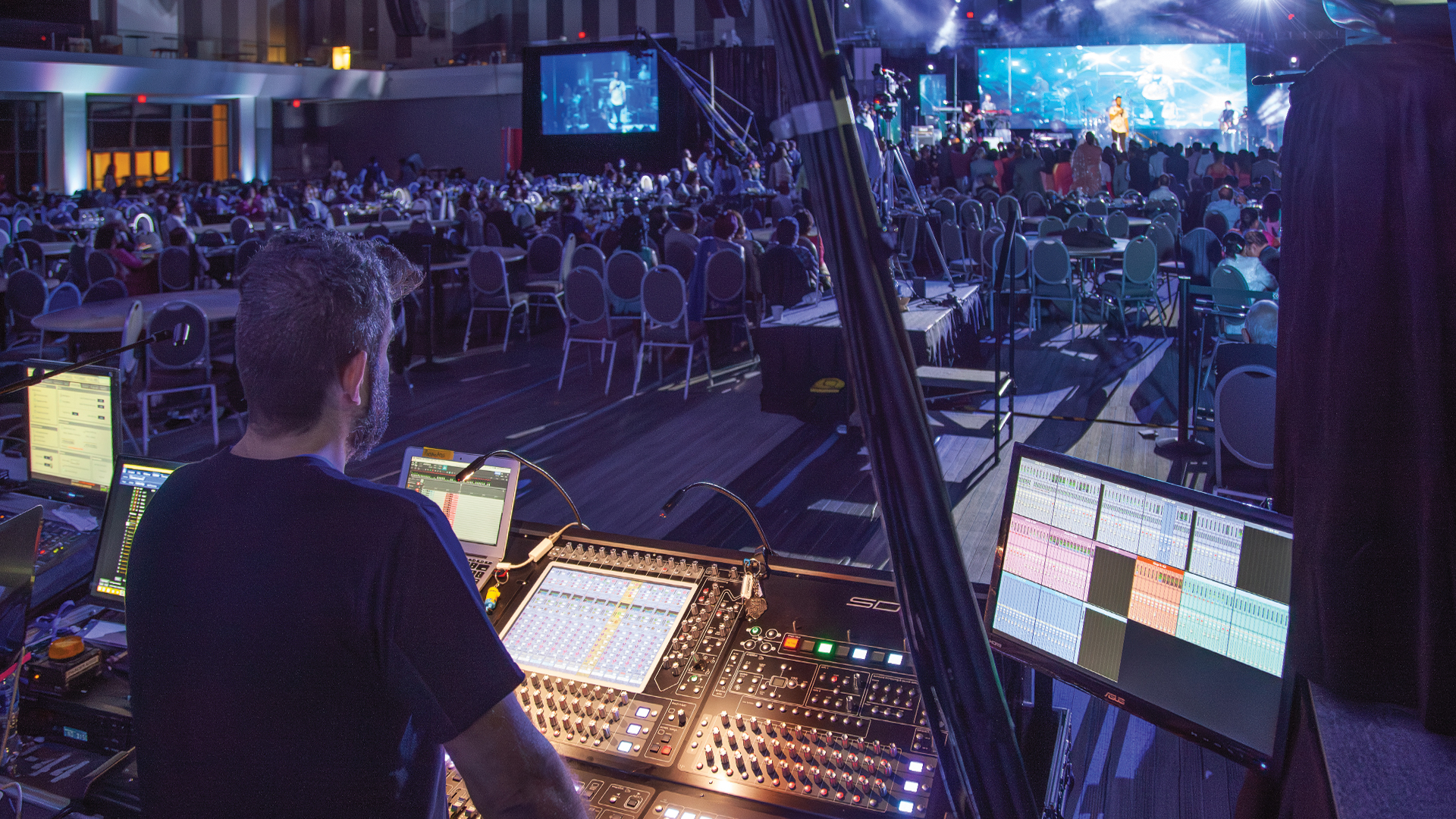
The audio team implemented a conservative gain structure throughout. “We ran the desk hotter and the amps cooler. Less amplifier headroom meant less thermal stress. The DiGiCo SD7 at FOH gave us the dynamic range to make this work without compromising sound quality.”
LED Wall Survival Tactics
The ROE Visual Carbon CB5 panels faced thermal challenges. Video engineer Marcus Webb monitored panel diagnostics through the Brompton Tessera processor and watched temperatures climb.
“LED efficiency drops and heat generation increases as temperature rises—a feedback loop that can run away quickly. We reduced panel brightness to 70% for daylight hours and increased gradually as the sun dropped. The content team adjusted all graphics to compensate, using lighter color palettes.”
The team implemented panel rotation during the multi-day festival. “We had spare CB5 panels in shaded storage. Every morning, we’d rotate the hottest-running panels out and replace them with cooled spares.”
Historical Perspective: Desert Productions Through the Decades
The American desert festival tradition traces to the 1960s California rock festival scene. Early events used equipment with wider temperature tolerances—the vacuum tube amplifiers and mechanical mixing consoles were designed for industrial environments.
The shift to solid-state electronics and digital processing brought improved performance but tighter thermal requirements. Modern Class-D amplifiers generate less heat but are more sensitive to elevated ambient temperatures.
The Lighting Rig Heat Management
The Robe MegaPointe fixtures and Claypaky Scenius Unico units required careful management. Lighting director Jennifer Santos implemented a pre-show cooling protocol. “We kept the rig dark during load-in and soundcheck, using work lights instead of show fixtures.”
The MA Lighting grandMA3 allowed programming virtual positions without striking lamps. “The fixtures only came up an hour before doors, minimizing heat accumulation during the hottest part of the day.”
Fan and Ventilation Management
Moving lights draw dusty desert air through their fixtures. “We increased the filter cleaning schedule to every eight hours—double the normal frequency. Clogged filters in extreme heat mean thermal shutdowns. We lost two fixtures to dust accumulation before implementing aggressive cleaning.”
Console and Processing Protection
The front-of-house position presented unique challenges. The Avid VENUE S6L and DiGiCo Quantum 7 consoles required climate-controlled environments. The production built a custom FOH tent with dedicated air conditioning.
“The tent wasn’t just about operator comfort—though that mattered too. The consoles and Waves SoundGrid servers needed to stay under 95°F or we’d risk data corruption and unpredictable behavior. We monitored internal temperatures constantly through the console diagnostics.”
Wireless Systems in Extreme Heat
The Shure Axient Digital wireless system faced battery challenges. Lithium-ion batteries lose capacity in extreme heat, reducing the transmission time from the expected four hours to sometimes less than two.
RF coordinator David Park implemented a battery rotation protocol. “We kept spare SB900A batteries in a cooled case and rotated them more frequently than normal. The Wireless Workbench software showed us battery health in real-time, so we could swap packs before they became critical.”
Crew Safety and Performance
Beyond equipment concerns, the crew safety protocols became paramount. Production manager Vasquez implemented mandatory hydration schedules and rotation breaks for all personnel.
“We had a medical tent with IV rehydration capability and trained EMTs on standby throughout the load-in. Four crew members required medical attention for heat-related symptoms during the first day. We adjusted the schedule to do heavy work during early morning and late evening hours only.”
Night Shift Operations
The production shifted to a nocturnal schedule for setup and strike. “We’d start at 4 AM and work until 10 AM, then resume at 7 PM. The temperature difference between 6 AM and 2 PM could be 30 degrees. That difference determined whether our equipment functioned normally or struggled to survive.”
Practical Heat Management Strategies
The lessons from this desert tour apply to any extreme weather production. First, understand the thermal limits of every system component. Manufacturers publish operating temperature ranges—these are real limits, not suggestions.
Second, build thermal management infrastructure into the production plan from the start. Portable cooling, shade structures, and equipment rotation schedules should be part of the initial design, not afterthoughts.
Third, monitor everything. Temperature sensors throughout the signal chain provide early warning of developing problems. The time to address thermal stress is before equipment fails, not after.
The desert doesn’t care about your production schedule or your equipment specifications. But crews who prepare for extreme conditions—who treat thermal management as a primary concern rather than an afterthought—can deliver world-class shows in environments that should make such achievement impossible. The tour survived because preparation met challenge, and determination outlasted the heat.
