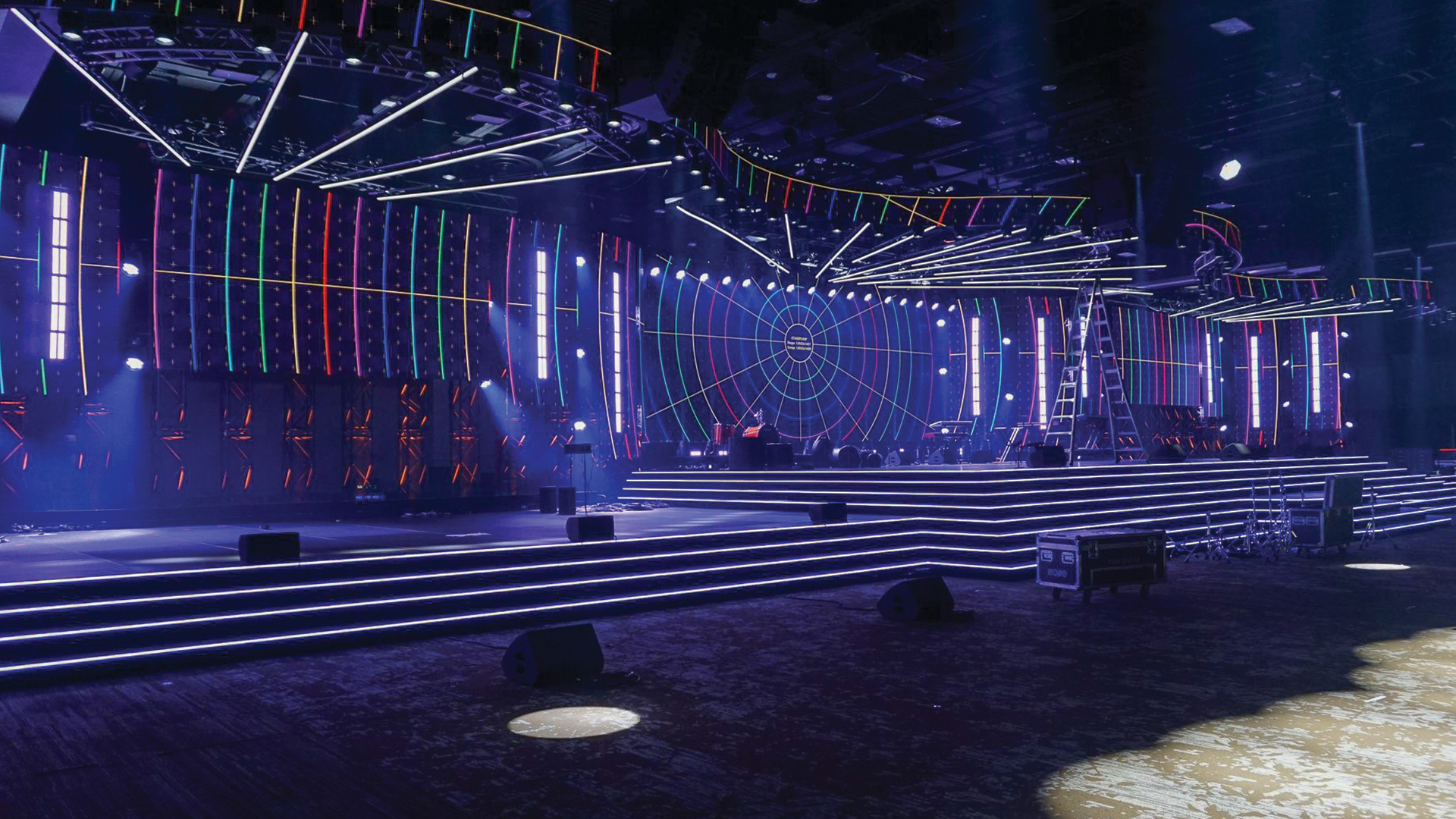
Something shifted in corporate staging around 2021. Scenic designers who had spent decades thinking in horizontal orientations—wide screens, lateral scenic elements, audience sightlines optimized for breadth suddenly began stacking pixels vertically. Tall vertical LED screens emerged from experimental installations to become keynote staging orthodoxy with remarkable speed. Understanding this trend requires examining botxh the aesthetic revolution and the practical circumstances that enabled it.
The portrait orientation of modern smartphone consumption fundamentally altered visual expectations. Audiences now spend more viewing time consuming vertical video on TikTok, Instagram Reels, and YouTube Shorts than horizontal content on televisions. This perceptual shift primed audiences to accept even prefer vertical presentation formats that would have felt alien a generation earlier.
Simultaneously, LED panel technology achieved the cost-performance intersection necessary for vertical deployment. ROE Visual CB5, Absen PL Series, and INFiLED products delivered broadcast-quality imagery at price points that made tall column configurations economically viable. The pixel pitch improvements from 4mm industry standard to 1.9mm and below—meant vertical screens could display content with resolution sufficient for close-proximity viewing at keynote distances.
The Architectural Argument
Vertical LED columns create architectural presence impossible with horizontal configurations at equivalent budgets. A single vertical screen measuring 6 feet wide by 20 feet tall requires approximately 120 square feet of LED surface. Achieving equivalent visual impact horizontally would demand screens spanning 30 feet or more significantly higher equipment costs and venue width requirements.
This architectural efficiency matters particularly in ballroom venues where ceiling height exceeds width. Convention center ballrooms routinely offer 25-30 foot ceilings within spaces only 80-100 feet wide. Horizontal screens fighting these proportions appear squat and underwhelming. Vertical configurations exploit available height, creating commanding visual statements appropriate to executive content.
The relationship between vertical screens and presenter positioning produces striking visual compositions. Speakers standing before or between vertical elements gain visual framing that horizontal screens cannot provide. The effect borrowing from classical portraiture traditions elevates human presence within technological environments.
Content Considerations
Successful vertical LED deployment requires content designed specifically for portrait orientation. Repurposing standard 16:9 presentation content to vertical displays produces visually awkward results—stretched imagery, misaligned typography, wasted screen real estate. Content teams must develop assets with vertical formats as primary outputs rather than afterthoughts.
Motion graphics for vertical screens demand revised composition approaches. Eye movement patterns differ between horizontal and vertical formats. Horizontal content typically moves left-to-right following reading patterns. Vertical content more naturally accommodates top-to-bottom motion, with movement originating above audiences and descending toward stage level.
Data visualization actually benefits from vertical formats in many applications. Organizational charts, timeline graphics, and comparison matrices often fit portrait orientations more naturally than landscape. Bar charts oriented vertically communicate magnitude more intuitively than horizontal alternatives forced into wide screen formats.
Stock media libraries have responded to vertical demand with dedicated portrait collections. Envato Elements, Shutterstock, and Motion Array now categorize vertical assets separately, simplifying content development for vertical LED applications. This infrastructure maturation accelerated adoption by reducing creative development requirements.
Rigging And Structural Realities
Tall vertical installations present engineering challenges distinct from horizontal configurations. Center of gravity calculations for 20-foot vertical structures differ substantially from wider, lower arrangements. Point loads on rigging systems concentrate force differently, often requiring structural analysis beyond standard production engineering.
Ground support systems from manufacturers like Global Truss and Total Structures have developed specific products for vertical LED applications. These systems account for the overturning moments that tall, narrow structures generate forces that standard truss configurations may not adequately resist. Production companies unfamiliar with these requirements risk equipment failure or venue damage.
Seismic considerations affect vertical installations in earthquake-prone regions. California-based productions operate under stringent Title 24 requirements that influence tall structure engineering. The additional compliance documentation and structural certification extends production timelines and budgets.
Wind loading, relevant for outdoor installations and some indoor venues with significant air handling, affects tall structures disproportionately. Engineering calculations must account for sail area and lever arm multiplication that horizontal configurations avoid.
Technical Execution Details
Signal distribution for vertical screens requires careful planning. Content flowing from media servers typically outputs in standard landscape formats. Resolume Arena, Disguise, and Green Hippo Hippotizer systems enable custom output mapping that rotates and scales content appropriately. The configuration complexity increases production prep time but creates necessary visual results.
Pixel mapping software must account for panel arrangement within vertical structures. Most LED tiles are manufactured for horizontal assembly—the module orientations within tiles assume specific installation directions. Vertical configurations may require panels rotated from standard positioning, affecting pixel map creation in control software.
Viewing angle specifications matter more for vertical configurations than horizontal alternatives. Audience members at stage edges view vertical screens at oblique angles that exceed LED panel specifications more quickly than horizontal setups. Specifying panels with wider viewing angles typically 160 degrees horizontal and vertical prevents color shift and brightness loss for side-positioned attendees.
The Design Language Evolution
Vertical LED adoption has influenced broader scenic design language. Stages now incorporate vertical elements—scenic columns, lighting towers, fabric drops—that complement and balance LED structures. The visual vocabulary has shifted from low, wide compositions toward designs featuring height emphasis and vertical rhythm.
Symmetrical and asymmetrical vertical configurations each serve different narrative purposes. Symmetrical arrangements—matched vertical screens flanking center stages create formal, authoritative visual impressions appropriate for executive communications. Asymmetrical layouts varying heights, offset positions suggest dynamism and creativity suited to product launches and innovation content.
The integration of vertical LED with projection mapping creates hybrid environments where pixel surfaces and projected imagery coexist. Barco and Christie projectors illuminate scenic surfaces surrounding vertical LED elements, extending visual environments beyond dedicated screen boundaries.
Budget And Timeline Implications
Vertical LED installations generally require equivalent or slightly lower equipment costs compared to horizontal alternatives delivering similar visual impact. The surface area mathematics favor vertical orientation—120 square feet of vertical presence versus 200+ square feet to achieve comparable horizontal impact.
However, installation labor often increases for vertical configurations. The rigging complexity, structural assembly requirements, and content preparation time exceed horizontal equivalents. Productions should budget 25-40% additional labor hours for vertical installations compared to horizontal setups of equivalent surface area.
Pre-production visualization becomes essential for vertical LED projects. Vectorworks, SketchUp, and Unreal Engine renderings allow clients and creative teams to evaluate vertical compositions before equipment arrives onsite. This investment prevents costly mid-production reconfiguration when vertical proportions don’t achieve anticipated visual effects.
The trend shows no indication of reversal. Content consumption patterns continue shifting toward portrait formats. LED technology continues improving while costs decline. Production companies developing vertical LED competency position themselves for ongoing demand that horizontal-only expertise cannot satisfy.
