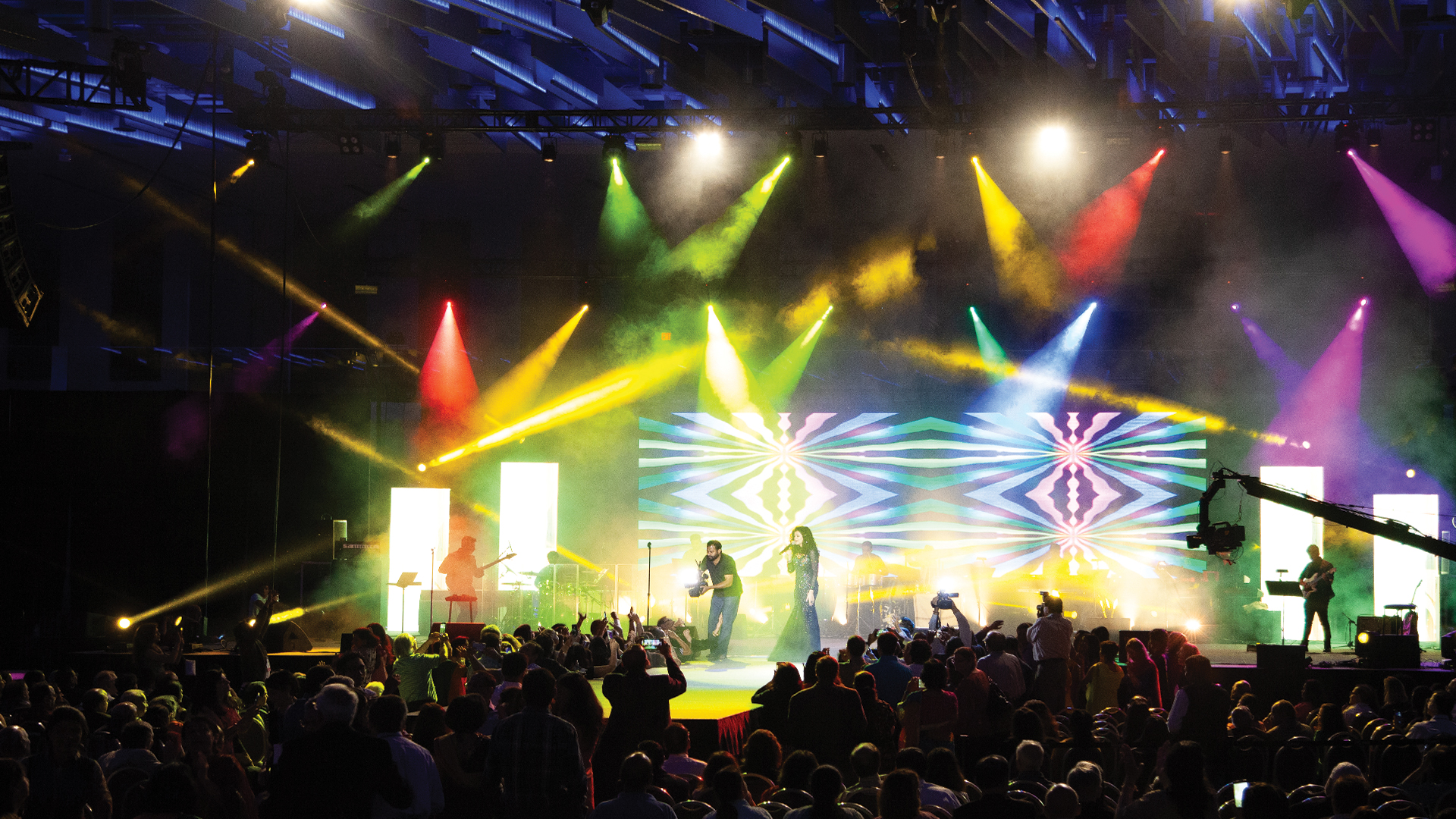

Live concerts in 2025 have evolved into immersive multimedia experiences, blending sound, visuals, technology, and atmosphere into one cohesive performance. While crystal-clear audio forms the backbone of any event, lighting is what gives the show character, emotion, and dramatic impact. Whether it’s a subtle wash of warm colors during an acoustic ballad or explosive strobe bursts during an EDM drop, great stage lighting design shapes how audiences feel every moment of the performance.
Lighting doesn’t just illuminate the stage. It sets the mood, directs attention, enhances storytelling, and synchronizes with music to transform an event from “good” to unforgettable. That’s why modern event planners, lighting designers, and production companies invest heavily in powerful fixtures, creative programming, and cutting-edge control systems. This guide breaks down everything that goes into professional lighting design for concerts — from equipment selection to color theory, FX integration, and real-world execution.
The Core Principles Behind Effective Concert Lighting
Great lighting follows a clear visual logic. It must enhance the performance without distracting from it. While creativity plays a major role, every lighting designer follows a few key principles that make their work effective on any stage.
Visibility
No matter how complex or artistic the lighting becomes, performers must remain visible. This requires balanced front light, smooth color temperature, and strategic placement of fixtures to avoid harsh shadows.
Mood
Lighting defines the emotional tone of each moment. Warm colors feel intimate, cold tones feel mysterious, saturated colors feel energetic, and monochrome looks feel dramatic. The right palette makes the show immersive.
Movement
Dynamic lighting effects sync with the rhythm, pacing, and structure of songs. Moving heads, scanners, strobes, and blinder pulses all add motion and energy.
Focus
Lighting can highlight specific performers, sections of the band, or moments in the music. Spotlights and key lights guide the audience’s attention.
Balance
All visual elements — screens, lasers, beams, color washes — must work together cohesively. Without balance, lighting becomes chaotic instead of expressive.
Mastering these principles forms the foundation of professional stage lighting design.
Choosing the Right Lighting Fixtures for Live Concerts
Modern productions rely on a wide variety of lighting fixtures. Each type has its own purpose, range, and effect style, making it essential to select the right tools for the job.
Moving Head Beams
Beams create long, narrow shafts of concentrated light, often seen in EDM, rock, and theatrical shows. Their sharp look cuts through fog beautifully and creates high-impact effects.
Moving Head Spots
These fixtures offer greater versatility with gobos, prisms, and adjustable zoom. They shape patterns, project textures, and create a three-dimensional light environment around performers.
Wash Lights
Wash fixtures blanket the stage with smooth, soft, wide color. They serve as the foundational lighting that sets the visual tone and ensures performers remain visible.
LED Pars
Affordable, lightweight, and energy efficient, LED Pars are essential for uplighting, color washes, and architectural accents.
Blinders
Used for big hits, crowd interaction, and intense dramatic moments. They create powerful bursts of warm light that energize the audience.
Strobes
Strobes add extreme impact, especially during drops or climactic transitions. They create a sense of intensity and motion that amplifies the music.
Laser Fixtures
Lasers add futuristic, geometric visuals that interact with haze to create volumetric shapes in the air. They are extremely popular in EDM, techno, and large-scale stadium shows.
Each of these fixtures plays a unique role in modern stage lighting design, and combining them effectively is what separates amateur setups from world-class productions.
Understanding Color Theory in Concert Lighting
Color is one of the most powerful emotional tools in lighting design. It influences energy levels, mood perception, and even audience psychology.
Warm Colors
Oranges, reds, ambers, and golds create intimacy, romance, and comfort. They work well for ballads, acoustic sets, or soulful performances.
Cool Colors
Blues, purples, and greens feel atmospheric, dreamy, or mysterious. They are ideal for slow intros, atmospheric builds, or electronic breakdowns.
High-Saturation Colors
Bright pinks, cyans, vivid yellows, and neon greens create excitement and intensity. These colors are essential for fast-paced songs and big drops.
Monochromatic Palettes
One color across all fixtures creates clean, powerful visuals. Designers often use red-only, blue-only, or white-only moments for emotional highlights.
Complementary Colors
Using opposite colors like orange/blue or red/cyan creates depth and contrast, making the stage visually impressive from any angle.
Color theory gives lighting designers the ability to control the emotional flow of an entire concert without saying a word.
Programming Lighting: The Secret Behind a Perfect Show
Programming is where creativity meets technical execution. A designer uses lighting consoles to create cues, effects, color transitions, and timed movements. These cues synchronize with musical elements — vocals, beats, drops, guitar solos, and emotional peaks.
Professional designers use advanced consoles like MA Lighting’s grandMA3, Avolites Titan, and Chamsys MagicQ to program shows. These consoles allow them to create:
Smooth crossfades
Dynamic chases
Layered color presets
Complex movement patterns
Pixel-mapped effects
Timecode-synced transitions
Live playbacks for improvisation
For large tours, shows are often pre-programmed using 3D visualization software like Depence2 or Capture before even entering the venue. This saves hours of setup time and ensures consistent results at every location.
Working with Fog, Haze, and Atmospherics
Lighting is only half the story. Fog and haze machines play a major role in helping beams become visible, enhancing the depth and texture of lighting effects.
Haze
Light, sustained atmospheric texture. Perfect for concerts because it makes beams and colors appear three-dimensional.
Fog
Thick bursts of dense clouds. Adds dramatic punch for big moments.
CO2 Jets
Instant, high-pressure blasts that synchronize with drops and high-energy transitions.
Sparkulars and Pyro Effects
Special effects that elevate the emotional impact of live performances.
When used correctly, atmospheric effects amplify every lighting cue and elevate the entire visual experience.
Designing for Outdoor vs Indoor Concerts
Outdoor shows require different planning because wind, temperature, ambience, and sky conditions all influence lighting behavior.
Outdoor Challenges
Beams dissipate quickly without haze
Color saturation appears weaker in open air
Brightness must be increased
Fixtures must be weather-resistant
Angles must compensate for large viewing distances
Indoor Advantages
Controlled atmosphere
Higher haze concentration
More dramatic beam effects
Predictable acoustics
Better anchoring and rigging options
Designers must adapt their approach depending on the venue type to maintain consistent quality across events.
Lighting for Different Musical Genres
Each genre demands a unique visual identity.
EDM
Fast movement, high-saturation colors, lasers, strobes, pixel effects, synchronized chases.
Rock
Strong backlight, silhouettes, warm tones, strobes for dramatic hits.
Pop
Bright colors, dynamic patterns, clean looks, creative use of LED walls.
Jazz
Soft washes, subtle colors, crisp spotlights, elegant transitions.
Hip-Hop
Bold looks, strong beams, atmospheric haze, warm-white blinders.
Understanding genre expectations allows designers to deliver the right emotional tone and style.
The Future of Stage Lighting Design
Lighting technology is evolving at record speed.
Trends include:
AI-assisted programming
Ultra-bright energy-efficient fixtures
Advanced pixel-mapping
Integrated video + lighting workflows
Immersive 360° stage layouts
Wireless DMX systems
Hybrid laser/wash/beam fixtures
As concerts become more visually elaborate, designers will gain even more powerful tools to craft unique experiences.
Conclusion
Modern stage lighting design is the art and science of shaping emotion, energy, and visual identity through color, movement, and precise control. From fixture selection to programming, haze integration, and genre-specific styles, lighting designers play a critical role in making concerts unforgettable. As technology continues to advance, lighting will only grow more immersive, dynamic, and essential to the live music experience.
