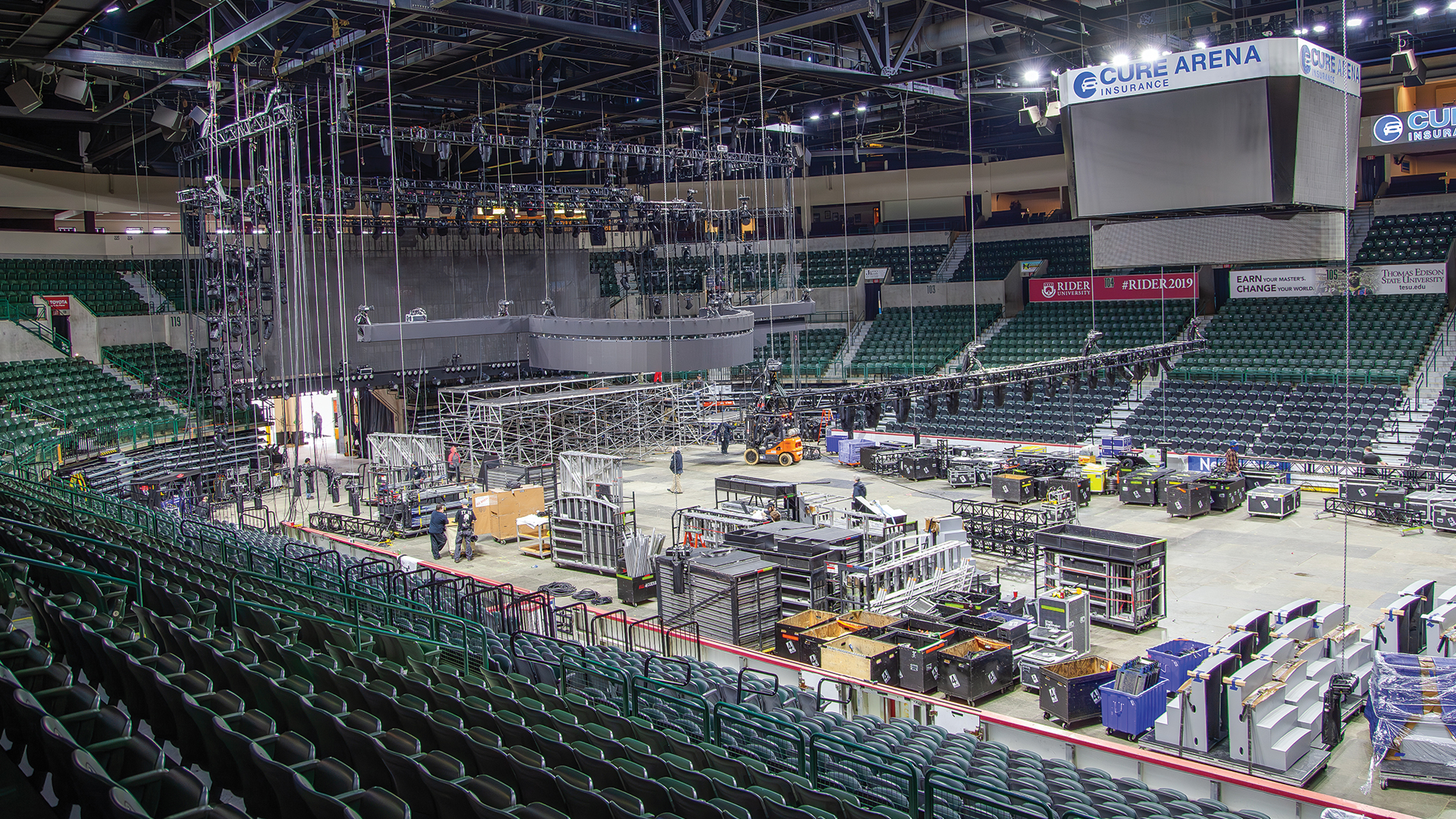
The delay tower exists to extend coverage supplementary support for the main arrays that serve distant audience positions. When these supporting players develop ambitions beyond their intended role, they can dominate the sonic landscape in ways that overshadow the very performance theyre meant to enhance.
The L-Acoustics K2 Delay Dominance
System engineer Marcus Webb deployed L-Acoustics K2 delay towers for a stadium show and discovered that properly positioned delays can become too prominent.
“The delays were positioned 150 feet from the stage to serve the lawn section. We tuned them using SMAART and aligned timing using the LA Network Manager. But audience complaints centered on the delays sounding louder than the mains. The coverage had become the star.”
The issue involved precedence effect management. “The delays arrived at the audience position before the mains due to a timing error in our calculations. The brain localizes sound toward the first arrival, so even though the mains were actually louder, the delays perceptually dominated.”
The d&b audiotechnik Ground Stack Assertion
Ground-stacked d&b audiotechnik V-Series arrays provide flexible deployment options for venues where flying isnt possible. FOH engineer Sarah Chen encountered a ground stack that developed territorial behavior.
“We had V8 arrays on the deck flanking the stage, supplemented by V-SUBs underneath. During the headliners set, the stage-right stack started producing more low-end than its counterpart. The asymmetry was subtle but noticeable—like the stack wanted to claim its side of the venue.”
Investigation revealed a floor coupling difference between positions. “Stage right sat on a concrete section while stage left was over a hollow area above the venue basement. The different floor impedances were causing dramatically different subwoofer coupling. We adjusted ArrayProcessing compensation to balance the coverage.”
Historical Context: The Evolution of Distributed Sound
The concept of distributed sound reinforcement dates to the 1930s when Bell Labs engineers experimented with multiple loudspeaker positions for large public address systems. The goal then, as now, was extending coverage without simply increasing main system volume.
The Grateful Dead Wall of Sound (1974) represented an extreme approach—massive speaker columns for each instrument, creating natural delays through physical distance. Modern distributed systems achieve similar coverage with far less equipment through sophisticated DSP-based time alignment.
The Meyer Sound LEOPARD Fill Insurgency
The Meyer Sound LEOPARD compact line array serves beautifully as a fill system. System tech David Park deployed LEOPARDs as front fills for an arena show and discovered their assertive tendencies.
“The LEOPARDs were positioned along the stage lip to cover the first 30 rows—standard front fill deployment. But audience members in those rows described an experience dominated by the fills rather than enhanced by them. The vocals seemed to come from below rather than from the stage.”
The solution required level and timing adjustment. “We reduced the front fill contribution by 4dB and added additional delay to push the perceived source back toward the mains. The Galileo GALAXY processor made these adjustments straightforward, but finding the right balance took careful listening.”
Practical Distributed System Management
Keeping supplementary PA elements in supporting roles requires careful attention to both level and timing. The Haas Effect (precedence effect) means that arrival time matters as much as SPL for perceived localization.
Regular walking of the coverage area during soundcheck identifies positions where delays or fills have become too prominent. SMAART measurement at multiple positions reveals the actual SPL contribution of each element.
Processor Configuration Best Practices
Modern system processors like the Lake LM 44, Dolby Lake, or manufacturer-specific solutions provide the tools for precise management of distributed systems. The key is using these tools to maintain the mains as the primary source while delays extend rather than replace that coverage.
PA towers and distributed systems serve essential roles in modern sound reinforcement, extending quality coverage to audience positions that main arrays cannot effectively serve. The skill lies in keeping these supporting elements in their proper role—audible but not dominant, present but not distracting from the performance they exist to enhance.
