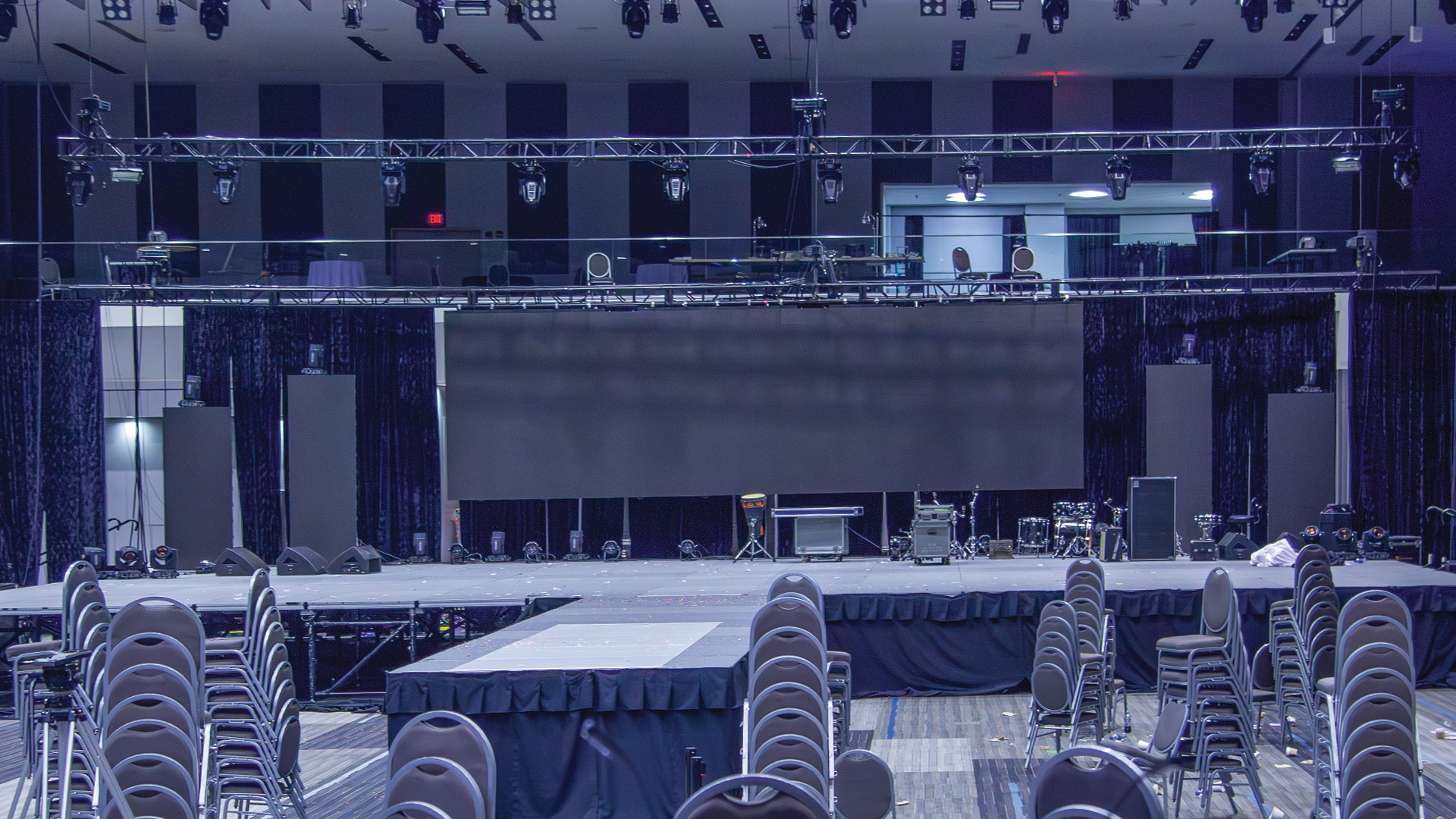
Walk into any contemporary conference center or corporate headquarters, and you’ll notice the obsession with glass. Floor-to-ceiling windows, glass partition walls, transparent atriums stretching toward the sky. Architects love it. Event planners dread it. The moment a microphone goes live in these crystalline cathedrals, the acoustic nightmare begins—audio reflections bouncing off every hard surface like a sonic pinball machine, turning crisp speech into unintelligible mush.
This isn’t a new battle. Back in the 1970s, when corporate America first embraced open-plan offices with vast glass facades, audio engineers discovered that the same materials creating visual transparency were acoustic saboteurs. The legendary sound designer Don Davis documented these challenges extensively, noting that glass reflects approximately 97% of sound energy—nearly as reflective as concrete. Modern AV production teams face amplified versions of these vintage headaches, complicated by today’s preference for minimalist venues where every acoustic treatment feels like an aesthetic intrusion.
Understanding the Physics Behind Glass Acoustics
Before throwing solutions at the problem, smart AV professionals diagnose the specific reflection patterns plaguing their venue. Glass doesn’t just bounce sound randomly—it creates predictable interference patterns based on the room’s geometry. Parallel glass walls generate flutter echo, that rapid-fire repetition making speakers sound like they’re talking inside a racquetball court. Curved glass surfaces focus sound into hot spots where audio becomes painfully loud, while adjacent areas remain muddy and unclear.
The reverberation time in glass-heavy spaces typically runs between 2.5 and 4 seconds—compared to the 0.8 to 1.2 seconds considered ideal for speech intelligibility. This extended decay means every word spoken collides with its predecessors, creating the classic cocktail party effect where audience members strain to understand presenters standing just meters away.
Strategic Microphone Selection and Placement
The first line of defense involves choosing microphones designed to reject environmental noise. Shure SM58 handhelds have served AV crews for decades precisely because their cardioid pattern rejects sound from the sides and rear. For lapel situations, the DPA 4088 headset microphone positions the capsule mere centimeters from the speaker’s mouth, dramatically improving the ratio between direct sound and reflected garbage.
Placement matters as much as selection. Position lecterns and presentation areas away from glass walls—even a 3-meter gap significantly reduces first-reflection intensity. When glass runs along one side of a room, orient the speaker facing the absorptive wall rather than projecting toward the reflective surface. This simple geometry shift can improve intelligibility by 30% without touching an equalizer.
The Array Approach: Directional Speaker Systems
Line array speaker systems from manufacturers like d&b audiotechnik and L-Acoustics revolutionized how professionals handle reflective venues. Unlike conventional point-source speakers that spray sound in wide patterns (exciting every glass surface in their path), line arrays focus audio energy precisely where audiences sit. The d&b Y-Series allows engineers to digitally steer coverage patterns, directing sound toward absorptive audience areas while minimizing energy hitting problematic glass zones.
Column speakers offer similar benefits in smaller installations. The Bose MA12EX modular column system features asymmetrical vertical coverage that can be adjusted to favor floor-level listeners over ceiling-height glass panels. This asymmetry prevents the speaker from exciting upper glass surfaces while maintaining even coverage across seating areas.
Temporary Acoustic Treatment Solutions
Permanent acoustic panels rarely survive corporate architects’ aesthetic veto, but temporary treatments transform glass-heavy venues during events. Heavy velour drapes hung from pipe and drape systems absorb mid and high frequencies effectively. The classic black masking drape, weighted at the bottom, provides roughly 0.6 noise reduction coefficient at 1kHz—not laboratory-grade performance, but meaningful improvement that audiences notice.
Strategic placement trumps coverage quantity. Rather than surrounding a room with fabric, focus treatments on specific reflection points. Use a mirror positioned at the listening position—any spot where you can see the speaker’s mouth reflects sound to the listener’s ears. These first reflection points deserve priority treatment. Cover them with absorptive material, and clarity improves dramatically even if other surfaces remain untreated.
Digital Signal Processing: Your Electronic Safety Net
Modern DSP processors offer powerful tools for managing problematic acoustics. The Yamaha MTX series and Biamp TesiraFORTÉ platforms include sophisticated room correction algorithms that measure acoustic response and apply compensating equalization automatically. While these systems cannot eliminate reflections, they can reduce their perceptual impact by adjusting frequency balance and timing.
Feedback elimination algorithms within these processors prove particularly valuable in glass venues. The Shure ANI22 audio network interface includes automatic feedback suppression that identifies and notches troublesome frequencies before they spiral into howling feedback—a common consequence of highly reflective environments pushing system gain to compensate for poor intelligibility.
The Historical Lessons of Broadcast Studios
Television broadcast studios solved similar challenges decades ago, and their solutions translate to corporate AV applications. The BBC’s original Broadcasting House, constructed in 1932, pioneered the use of angled surfaces to redirect rather than absorb reflections. This principle applies beautifully to glass-heavy modern spaces: rather than fighting reflections, redirect them toward absorptive areas.
Portable gobo panels positioned at calculated angles can redirect glass reflections toward carpeted floors or draped sections. Companies like GIK Acoustics produce modular bass traps and diffusion panels that roll into position during events and disappear into storage afterward. Their 244 Bass Trap panels, finished in aesthetically acceptable fabrics, often pass corporate decor approval while providing substantial low-frequency absorption that complements mid-range treatments.
Measurement and Verification: Trust Numbers Over Ears
Professional acoustic analysis software transforms subjective impressions into actionable data. Smaart by Rational Acoustics remains the industry standard for real-time acoustic measurement, revealing exactly how glass surfaces affect frequency response and reverberation time. The transfer function measurement shows precisely which frequencies suffer most from reflection interference, allowing targeted equalization rather than broadband guesswork.
Speech transmission index measurements quantify intelligibility objectively. An STI reading below 0.5 indicates poor intelligibility; glass-heavy venues often measure 0.35 to 0.45 without treatment. After implementing microphone selection, speaker positioning, temporary acoustic treatment, and DSP correction, well-executed interventions typically achieve 0.6 to 0.7 STI—the threshold where audiences understand presenters without strain.
Budget-Conscious Strategies That Actually Work
Not every production carries a line array budget. For smaller events in glass-heavy boardrooms, rental inventory and creative thinking deliver professional results. Positioning a simple Anchor Audio portable PA close to the audience (rather than beside the presenter) reduces the distance sound must travel and the opportunities for reflection interference. Wireless lapel microphones like the Sennheiser EW 100 G4 keep presenters mobile while maintaining consistent mouth-to-capsule distance.
Simple environmental adjustments cost nothing but attention. Closing motorized blinds reduces glass surface reflectivity. Arranging audience seating closer together creates a more absorptive mass—bodies absorb sound surprisingly well. Scheduling soundchecks when the venue operates in actual event configuration (blinds closed, furniture positioned, HVAC at expected levels) reveals problems before audiences arrive to suffer them.
Glass-heavy venues demand respect, not resignation. Every challenging acoustic environment has yielded to prepared professionals armed with the right tools, techniques, and understanding. The glass cathedral that intimidates unprepared crews becomes manageable once you understand the physics, select appropriate equipment, and implement systematic solutions. Your audience should focus on the message, not fight to decode it through sonic fog.
