The Corporate Drama Dilemma
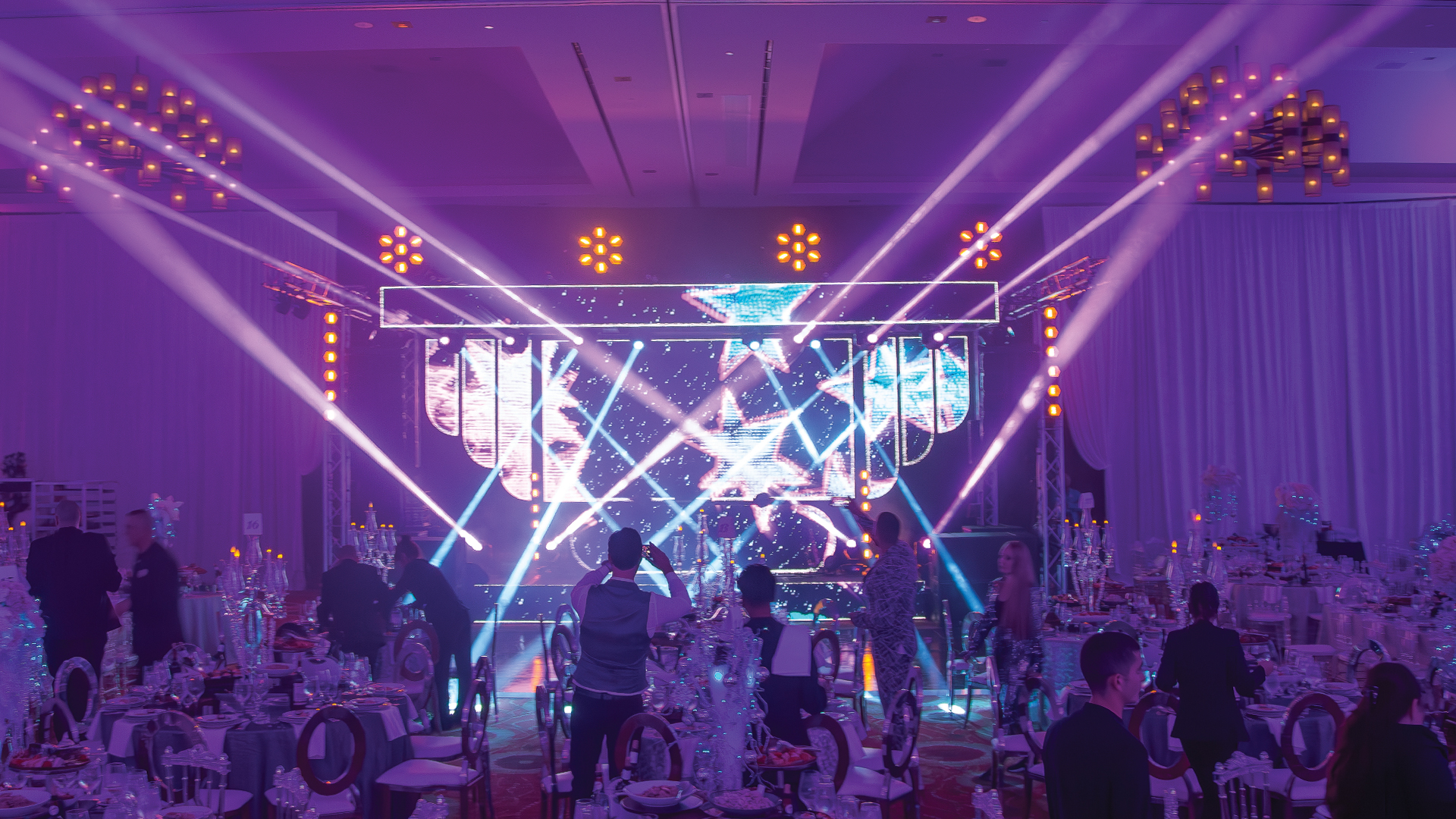
Your CEO steps to the podium. The lighting shifts and suddenly she’s bathed in a crimson wash with fog rolling across the stage while moving heads sweep the audience. The quarterly earnings presentation has accidentally become a rock concert. This overcorrection plagues corporate productions that understand they need dramatic lighting but don’t understand where drama ends and theater begins.
The distinction between professional drama and theatrical excess emerged as corporate events adopted entertainment production techniques through the 1990s and 2000s. Companies like PSAV (now Encore) and Freeman developed design vocabularies balancing visual impact against business context appropriateness. The lessons learned inform today’s best practices for corporate lighting design that elevates without embarrassing.
Legendary lighting designer Jennifer Tipton, whose work spans Broadway, opera, and dance, articulated the core principle: dramatic lighting reveals rather than decorates. Applied to corporate contexts, this means lighting choices should illuminate content, speakers, and key moments rather than demonstrating technical capability. The moving lights and color-changing LEDs serve the message; they never become the message.
The Architecture of Subtle Drama
Layered lighting the technique of building visual environments through multiple overlapping light sources creates drama through depth rather than spectacle. A keynote stage might combine base wash from ETC Source Four LED Series 3 fixtures, key light from Arri SkyPanel units, backlight providing separation, and accent lighting highlighting scenic elements. Each layer contributes; none dominates.
The color palette for corporate drama operates within narrower boundaries than entertainment production. Where concert lighting might span the entire spectrum, corporate design typically anchors in white and near-white tones with selective accent colors drawn from brand guidelines. A technology company’s blue might appear in architectural washes; a healthcare organization’s green might accent podium positions. The restraint reads as sophistication.
Intensity variation across stage zones creates focus without obvious manipulation. Key positions podiums, presenter marks, product display areas—receive 10-20% more illumination than surrounding areas. This differential guides audience attention subconsciously while maintaining the even, professional appearance executives expect. The grandMA3 and ETC Eos console families offer zone-based programming that maintains these differentials across cue sequences.
Timing and Transition: The Invisible Art
Cue timing separates elegant transitions from jarring scene changes. Corporate productions generally favor longer fade times than entertainment 5-8 second transitions where theater might use 2-3 seconds. This pacing respects the cognitive adjustment audiences need when shifting between content types while avoiding the theatrical snap that signals performance rather than presentation.
Transition triggers should feel motivated rather than arbitrary. Lighting shifts accompanying content changes new presentation slides, video playback, speaker introductions register as supportive rather than performative. The QLab software commonly controlling corporate presentations can trigger lighting cues alongside media, creating synchronized shifts that appear natural because they connect to visible content changes.
The hold and build technique adds anticipation without theatricality. Rather than snapping to full presentation lighting when a speaker takes the stage, lighting increases gradually during their approach, reaching full intensity as they settle at the podium. This progression creates subtle drama while appearing merely professional. Follow spot operators using Robert Juliat or Lycian fixtures execute these builds with precision impossible from pre-programmed cues.
Texture and Dimension Without Distraction
Gobo projection adds visual texture that reads as sophisticated rather than theatrical when applied with restraint. Abstract patterns—architectural fragments, soft organic shapes, subtle gradients—from Rosco or Apollo gobo libraries create dimensional interest without announcing themselves as effects. The key lies in low intensity and soft focus; gobos should enhance surfaces rather than dominate them.
Backlight and rim light provide speaker separation from backgrounds without the halo effect that signals stage production. Positioning back key fixtures at 45° angles behind presenters creates dimensional modeling that cameras capture beautifully while appearing natural to live audiences. The Arri Orbiter and Aputure LS 600 LED fixtures favored by broadcast productions deliver the color quality this technique demands.
Practical fixtures visible light sources integrated into scenic elements add warmth and dimension that artificial lighting struggles to replicate. Table lamps on panel discussion sets, illuminated scenic panels, or LED strips integrated into stage architecture provide ambient quality that softens the technical precision of theatrical fixtures. Productions for TED conferences exemplify this practical integration approach.
Technology Choices for Refined Results
LED fixture selection directly affects the refined versus theatrical balance. Fixtures designed for broadcast and film applications—the Litepanels Gemini, Kino Flo Celeb, and ARRI SkyPanel families prioritize color rendering quality over raw output, producing light that flatters presenters and products. Concert-oriented fixtures optimizing for punch and saturation may deliver technically impressive specifications while creating unflattering visual environments.
Color temperature control enables the warm-to-cool variation that creates subtle drama. Shifting stage lighting from 3200K tungsten warmth during casual segments to 5600K daylight clarity during data presentations creates mood variation that audiences sense rather than see. This technique, standard in broadcast news production, translates directly to corporate applications.
Dimming curves and color rendering specifications matter enormously for refined lighting. Fixtures with smooth dimming—no visible stepping or color shift at low levels enable the subtle intensity variations that create drama without theatricality. The ETC ColorSource and Chauvet Colorado fixture lines specify dimming performance alongside brightness, acknowledging that how fixtures dim matters as much as how bright they get.
Control system programming philosophy affects outcome significantly. Productions favoring timecode-triggered cues synchronized to video content achieve tighter integration than those relying on manual operator calls. However, manual follow elements—particularly follow spots responding to presenter movement add organic quality that pure automation lacks. The optimal approach typically combines both.
Adapting to Specific Corporate Formats
Keynote presentations benefit from dramatic lighting concentrated at session openings and closings, with more neutral coverage during content delivery. The opening moment might feature subtle color and movement; the presentation body operates in professional broadcast lighting; the conclusion returns to drama for applause and exit. This arc structure borrows theatrical pacing while maintaining corporate appropriateness.
Panel discussions require even coverage across multiple positions while allowing focus shifts during individual responses. The soft fill approach broad sources creating minimal shadows—works better than hard key lighting that creates unflattering contrasts when participants turn toward each other. Productions for World Economic Forum and Bloomberg events demonstrate effective panel lighting techniques.
Product reveals represent the corporate format most accepting of theatrical technique. The moment when curtains part or covers lift legitimately calls for dramatic lighting carefully focused spots, saturated color accents, even moving light effects. The key lies in containing theatricality within the reveal moment itself, returning to sophisticated restraint once products enter discussion phases.
Award ceremonies occupy similar theatrical-appropriate territory. Winner announcements, trophy presentations, and stage crossings justify lighting drama that would overwhelm standard presentation formats. Study the Webby Awards or SXSW Interactive ceremonies for corporate-appropriate awards lighting that celebrates without descending into Oscars-style spectacle.
Common Pitfalls and How to Avoid Them
Moving light movement represents the most common overcorrection. Intelligent fixtures from Martin, Robe, and Clay Paky can execute stunning choreography and should almost never do so in corporate contexts. When moving lights appear in corporate productions, they typically reposition during transitions and hold static positions during content. Movement for movement’s sake reads as showing off rather than serving communication.
Color saturation often exceeds appropriate levels. Where concert production might drive saturated color at 100%, corporate applications rarely exceed 30-50% saturation, allowing color to tint rather than dominate. The exception brand colors in welcome environments or accent positions still benefits from restraint; a corporate blue at 60% saturation often reads more professionally than the same blue at 100%.
Haze and atmospheric effects require careful calibration for corporate environments. Light atmospheric enhancement reveals beam structure and adds depth; heavy haze transforms business presentations into nightclub aesthetics. The MDG ATMe and Look Solutions Unique 2.1 hazers offer precise output control enabling subtle atmospheric enhancement without fog-machine excess.
When your next corporate production requires dramatic lighting that elevates without embarrassing, remember that restraint signals sophistication while excess signals insecurity. The most effective corporate lighting designers possess theatrical technique they choose not to deploy, understanding that drama serves best when audiences feel its presence without identifying its mechanics.
