Tales of Screaming Speakers and the Engineers Who Tamed Them
When Sound Systems Develop Personalities
The unmistakable screech of audio feedback piercing through a venue has ended more careers and relationships than any other phenomenon in live sound reinforcement. That howling demon emerges when sound from speakers re-enters microphones, creating an infinite loop that escalates into the sonic equivalent of a banshee convention. Behind every controlled concert lies an audio engineer who has battle scars from feedback incidents that would make lesser mortals weep.
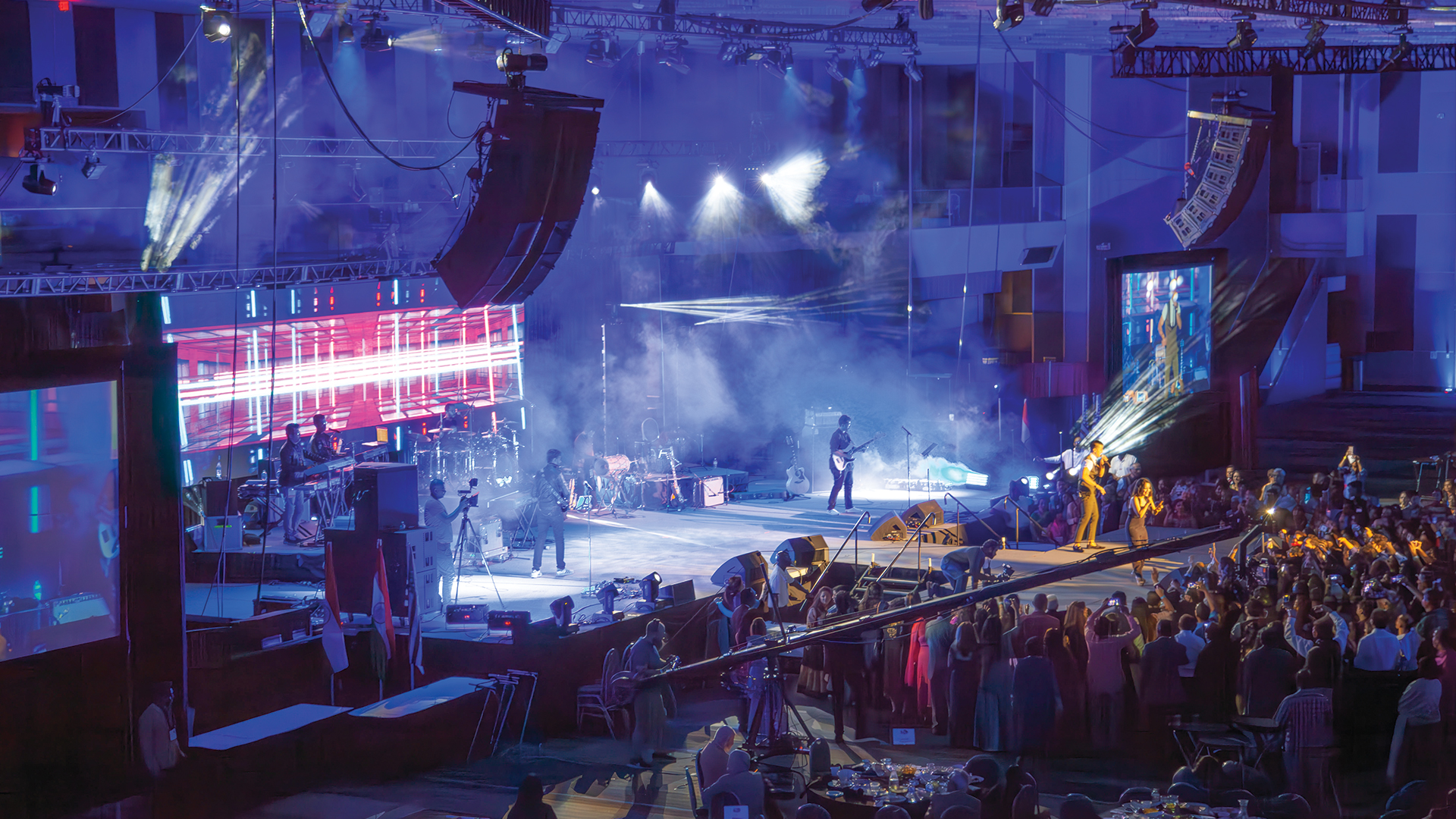
JBL VTX series line arrays and Meyer Sound LEO Family systems represent the pinnacle of modern PA technology, yet even these premium rigs surrender to feedback when circumstances conspire against them. The phenomenon traces back to the earliest days of electronic amplification, when inventors like Lee de Forest first experimented with vacuum tube amplifiers in the 1910s. Feedback wasn’t just a problem—it was initially considered a feature, demonstrating the power of amplification before audiences understood what they were witnessing.
The Physics of Acoustic Betrayal
Understanding feedback requires appreciating the acoustic coupling between speakers and microphones. When the gain before feedback threshold gets exceeded, the system enters a state of acoustic regeneration where even a whisper becomes a roar. The frequency at which feedback occurs depends on room acoustics, microphone placement, speaker dispersion patterns, and sometimes seemingly supernatural factors that defy logical explanation.
Shure SM58 microphones have earned legendary status partly because their cardioid polar pattern helps reject off-axis sound, reducing feedback susceptibility. Similarly, Sennheiser e935 capsules offer superior feedback rejection through precise frequency response tailoring. But even the best microphones become feedback machines when placed in acoustic environments that create standing waves or when operators push gain beyond reasonable limits in desperate attempts to overcome venue noise.
Historic Disasters That Changed Industry Practices
The 1969 Woodstock Festival featured numerous feedback incidents that became part of rock history, including Jimi Hendrix’s opening moments that required frantic adjustment by the Hanley Sound crew. Less romantically, the 1985 Live Aid concert at Wembley Stadium experienced feedback issues during several performances that broadcast globally to over 1.9 billion viewers, demonstrating that even world-class production teams couldn’t fully tame the acoustic beast.
Corporate events generate their own feedback horror stories. One infamous 2019 pharmaceutical conference at a Las Vegas hotel featured a Q&A session where every wireless lavalier microphone from the Shure QLXD system began feeding back simultaneously after a guest accidentally walked too close to the front-fill speakers. The resulting cacophony—later described by attendees as “mechanical screaming”—interrupted a presentation by the company’s CEO to 3,000 shareholders. The A/V company responsible lost that client permanently.
Modern Solutions and Ancient Wisdom
Today’s digital signal processors from manufacturers like Lake, BSS Audio, and dbx DriveRack include sophisticated automatic feedback suppression algorithms that identify problematic frequencies and notch them in real-time. The Shure PSM 1000 system and Sennheiser EW-DX wireless platforms incorporate built-in feedback detection that alerts engineers before disasters occur. Yet these technological marvels only supplement, never replace, the trained ears and strategic microphone placement that define professional live sound engineering.
The concept of ring-out remains fundamental to feedback prevention. This process involves slowly increasing gain until feedback begins, identifying the frequency using RTA (Real-Time Analysis) tools like those in SMAART software, then cutting that frequency with a narrow parametric EQ filter. Experienced engineers can ring out a system in minutes, creating multiple graphic EQ notches that increase usable gain by 6-12 dB—the difference between a successful event and sonic catastrophe.
Venue Acoustics and the Feedback Equation
Every room presents unique feedback challenges based on its acoustic properties. Reverberant spaces like cathedral halls and gymnasium venues create extended decay times that allow feedback to build more easily than acoustically treated theaters. The introduction of acoustic treatment panels from companies like Auralex and GIK Acoustics transformed many problematic venues, though permanent installations remain rare outside purpose-built performance spaces.
Speaker system design fundamentally impacts feedback susceptibility. D&B Audiotechnik SL-Series and L-Acoustics K2 systems offer precisely controlled directivity that keeps sound energy focused on audiences rather than bouncing off walls and ceilings into microphones. The line array revolution that began in the late 1990s reduced feedback problems significantly by enabling better coverage with less overall SPL, though improper deployment negates these advantages entirely.
The Human Element in Feedback Management
Technology assists, but human judgment ultimately determines whether feedback occurs. Front-of-house engineers develop sixth senses for pre-feedback conditions—that subtle tonal shift in the room that precedes disaster. Veterans like Big Mick Hughes (Metallica’s longtime engineer) and Robert Scovill (Tom Petty, Rush) built careers partly on their preternatural ability to sense and prevent feedback before it manifests audibly.
Training programs at institutions like Full Sail University and SAE Institute now incorporate virtual reality feedback simulation systems that allow students to experience and manage feedback scenarios without risking equipment or clients. These simulators use convolution reverb modeling to recreate acoustically challenging venues, preparing the next generation of audio engineers for the inevitable moments when their PA systems decide to express themselves in the most unflattering ways possible.
Future Directions in Feedback Prevention
Emerging technologies promise further reduction in feedback incidents. Beam-steering speaker arrays from Holosonics and Renkus-Heinz direct sound with unprecedented precision, minimizing acoustic energy reaching microphone positions. AI-driven mixing consoles from DiGiCo and Waves can predict feedback-prone frequencies based on real-time room analysis, making preventive adjustments before problems occur. The dream of feedback-free live sound may never fully materialize—physics remains physics—but the tools for managing it grow more sophisticated with each passing year, turning screaming speakers into increasingly rare visitors at well-produced events.
