The Big Three: How Three Companies Came to Define the Sound of Live Entertainment
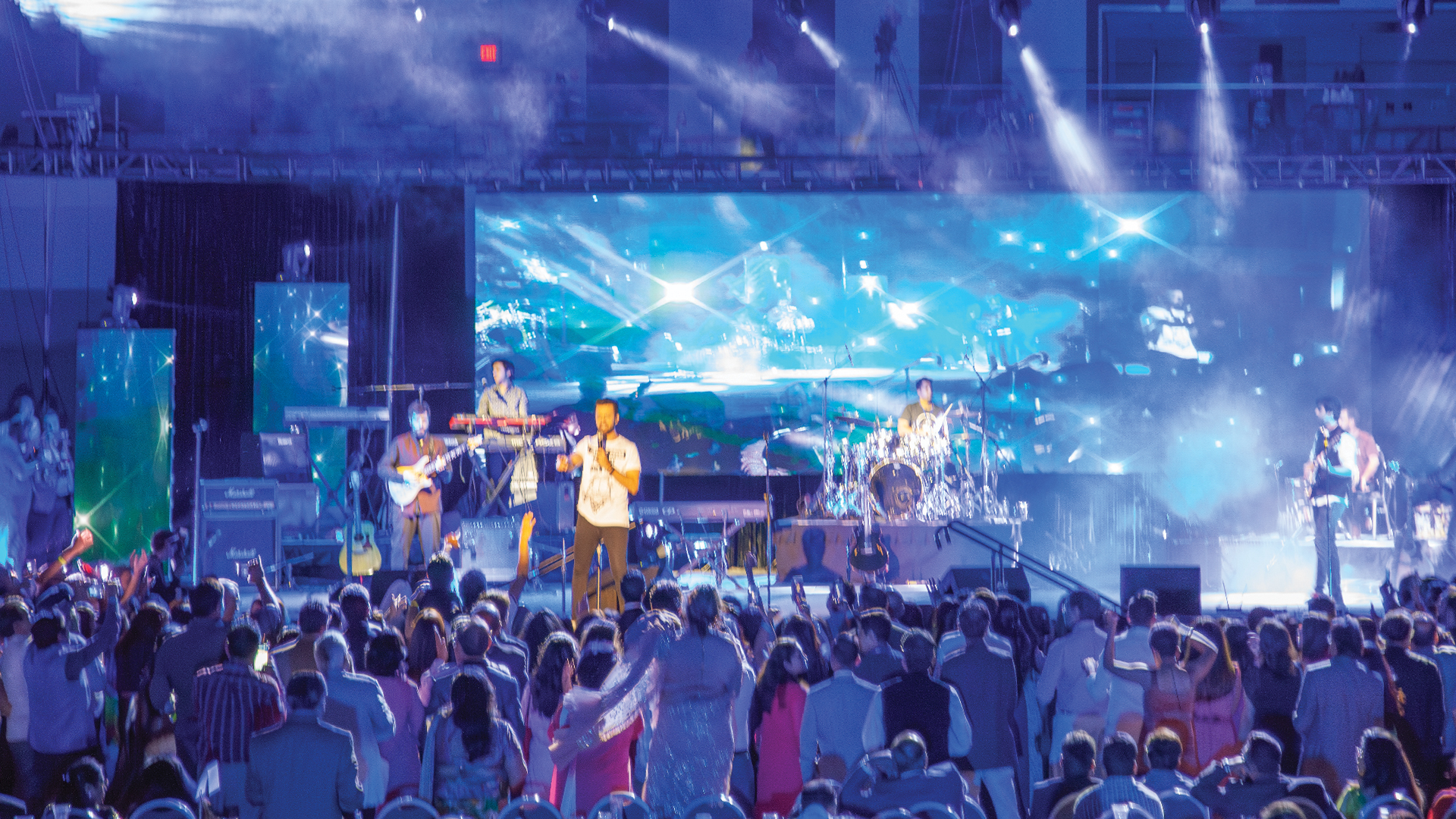
There is a statistic that crystallizes the extraordinary market concentration in professional touring audio: the overwhelming majority of 12,000+ major shows staged globally each year — stadium concerts, arena tours, large-scale corporate events, major festivals — are reinforced by systems manufactured by three companies: JBL Professional (a Harman brand, subsidiary of Samsung Electronics), d&b audiotechnik (a German independent company), and L-Acoustics (a French independent company). The oligopoly these three have achieved in the professional touring and large-venue market is the result of decades of sustained engineering investment, global service infrastructure development, and the particular network effects of an industry where artist riders, production manager preferences, and local rental company inventory decisions reinforce each other in patterns that are extremely resistant to disruption.
Understanding how this concentration came about requires a brief historical excursion into the sound reinforcement industry of the 1970s and 1980s — a fragmented, geographically siloed market where Clair Brothers in Pennsylvania built systems for the American rock touring market, WEM and Turbosound served the UK festival circuit, Electro-Voice dominated American corporate events, and European classical touring used entirely different equipment chains from rock touring even when playing the same venues. The consolidation that produced today’s Big Three was not an inevitable market outcome — it was the result of specific technical innovations, strategic decisions, and occasional market accidents that rewrote the industry’s competitive landscape across two decades.
JBL Professional: The American Sound That Conquered the World
JBL’s lineage in professional audio traces to James B. Lansing, whose transducer designs of the 1940s and 1950s established the technical foundations that JBL’s successors refined over the following seven decades. The brand’s dominance in permanent venue installations — sports arenas, convention centers, theme parks, and airports — was established through the 1970s and 1980s when JBL’s horn-loaded touring systems became standard equipment for American stadium rock. The transition from these horn-loaded systems to the modern VTX Series line arrays required fundamental transducer redesign, with Differential Drive technology replacing conventional single-gap motors and precision waveguides replacing the exponential horns that defined the previous generation.
JBL’s Harman corporate home provides distribution infrastructure that neither d&b nor L-Acoustics can match at the entry and mid-market level, with JBL Commercial and JBL Professional products sharing distribution channels that give the brand unparalleled global reach. The Crown amplifier integration — both companies under the Harman umbrella — creates a complete system architecture from transducer to output stage that simplifies procurement, warranty management, and technical support for institutional buyers who represent the backbone of JBL’s global volume.
d&b audiotechnik: German Precision at Scale
D&b’s rise to global prominence is one of the most studied cases of niche market domination in professional AV. Founded in 1981 in Straubenhardt by Juergen Daubach and Werner Bosch, the company spent its first decade serving the German touring and theatre market before the J Series line array — introduced in 2003 — announced d&b’s ambition to compete at the highest level of international touring. The J Series’ combination of consistent coverage patterns, integrated DSP via the D12 amplifier, and the ArrayCalc prediction software that brought engineering rigor to system design represented a complete rethinking of how a professional audio company could differentiate itself beyond raw transducer performance.
The d&b Soundscape object-based audio platform — introduced in 2018 — represents the company’s most ambitious product initiative, enabling productions to create immersive audio environments in which individual sound sources are positioned in three-dimensional space and reproduced with unprecedented precision across complex multi-speaker systems. Deployments at Elbphilharmonie Hamburg, Barbican Centre London, and numerous touring productions have established Soundscape as the leading platform for immersive live audio — a market that d&b has created as much as captured.
L-Acoustics: French Engineering and the Line Source Revolution
The story of L-Acoustics is inseparable from Dr. Christian Heil‘s 1992 development of the DOSC (Dispositif d’Obtention de Sources Coherentes) waveguide — a curved acoustic lens that produces a cylindrical wavefront from a rectangular source, enabling coherent summation of adjacent cabinets across the audio bandwidth. The V-DOSC system built around this technology changed the competitive landscape of professional audio in ways that few single product innovations ever achieve, demonstrating at events like Glastonbury 1994 and Woodstock 1999 that the physical limitations of point source and horn-loaded systems could be genuinely overcome rather than merely managed.
L-Acoustics’ K1 system — introduced in 2007 and still considered a benchmark for large-scale touring — and the subsequent K2, K3, and Kara family have created a product ladder that addresses every scale of professional application from touring residencies to permanent installation. The L-Acoustics Network Partner program — certifying rental companies in system design, deployment, and maintenance — has built a global service infrastructure that allows tours to supplement their home inventory with locally certified equipment in any of 80+ countries, removing one of the most significant operational barriers to international touring for productions committed to maintaining consistent system specifications across all dates.
The 12,000-Show Footprint and What It Means
The combined footprint of JBL, d&b, and L-Acoustics across 12,000+ shows annually represents more than market share data. It represents an acoustically defined global standard for what live entertainment sounds like — a shared technical infrastructure that enables the international touring economy by ensuring that a production designed and sonically balanced on one continent will translate reliably to venues on another. The engineers, production managers, and artists whose careers depend on this predictability have, collectively, made these three brands the most important technical fact in live entertainment production. Their continued dominance will be tested by ambitious challengers including Meyer Sound, Adamson Systems, Outline, and Martin Audio — all of whom produce exceptional systems — but the network effects embedded in the global touring infrastructure make displacement of the Big Three a generational challenge rather than a product cycle.
