The Wireless Revolution: How Astera Untethered Event Lighting From the Cable Grid
In 2012, when Astera GmbH shipped its first AX1 PixelTube to a handful of German event companies, it was solving a problem so endemic to the industry that most production designers had simply designed around it: the tyranny of the power and data cable. Every creative vision that placed luminaires in the center of a stage, suspended mid-air, embedded in scenic elements, or positioned in audience areas was constrained by the practical realities of running DMX and IEC power cables to those locations. The AX1’s combination of battery-powered operation and wireless DMX via ArtNet didn’t just solve the cable problem — it fundamentally expanded the vocabulary of what was possible in event lighting design.
Today, Astera’s product ecosystem spans from the original AX1 PixelTube through the Titan Tube, AX3 LightDrop, AX5 TriplePar, AX9 ParLED, and the NYX Bulb — a range comprehensive enough to address virtually every application where wireless operation delivers a creative or logistical advantage. The Titan Tube, with its RGBWAUV six-color mixing, 8 hours of battery runtime at mid-intensity, and IP65 weatherproofing, has become arguably the most globally deployed wireless lighting fixture in history, appearing on productions ranging from Beyoncé’s film productions to FIFA World Cup ceremonies to Apple product launches
The Corporate Event Sector: Astera’s Quiet Dominance
While music event applications generate Astera’s most spectacular visual deployments, the company’s deepest market penetration has come through the corporate event sector — an industry segment where the constraints of temporary venues, tight rigging budgets, and rapid turnaround schedules align perfectly with Astera’s wireless value proposition. A corporate gala in a grand hotel ballroom without rigging infrastructure or accessible power distribution can deploy 64 Titan Tubes on floor stands and table centerpiece mounts, controlled wirelessly via a single Astera AsteraApp or integrated into a GrandMA3 or Chamsys MQ500 console via ArtNet over Wi-Fi, without pulling a single power cable.
For automotive launches — a sector that defines high-end corporate AV production — Astera fixtures have become the designer’s default tool for illuminating vehicles before a reveal moment. The AX3 LightDrop and AX5 TriplePar generate sufficient output to graze car bodywork with dramatic side lighting while remaining completely invisible in the shooting window, unconnected to any visible infrastructure. BMW Group, Mercedes-Benz, and Porsche product reveals at events like the Geneva Motor Show and Los Angeles Auto Show have deployed Astera wireless systems extensively, with lighting designers citing the ability to position luminaires literally inside display environments as the decisive advantage.
Music Tour Applications: Astera in the Touring Rider
The transition of Astera fixtures from corporate event tools to genuine touring staples accelerated dramatically after 2017, when leading lighting designers began incorporating Titan Tubes into stage set designs that leveraged their form factor as a visual element rather than simply a lighting tool. The fixture’s cylindrical pixel-mapped format — identical in appearance to a fluorescent tube but capable of full RGB animation — allowed set designers to create the illusion of practical architectural lighting within stage structures that were, in reality, fully automated DMX instruments.
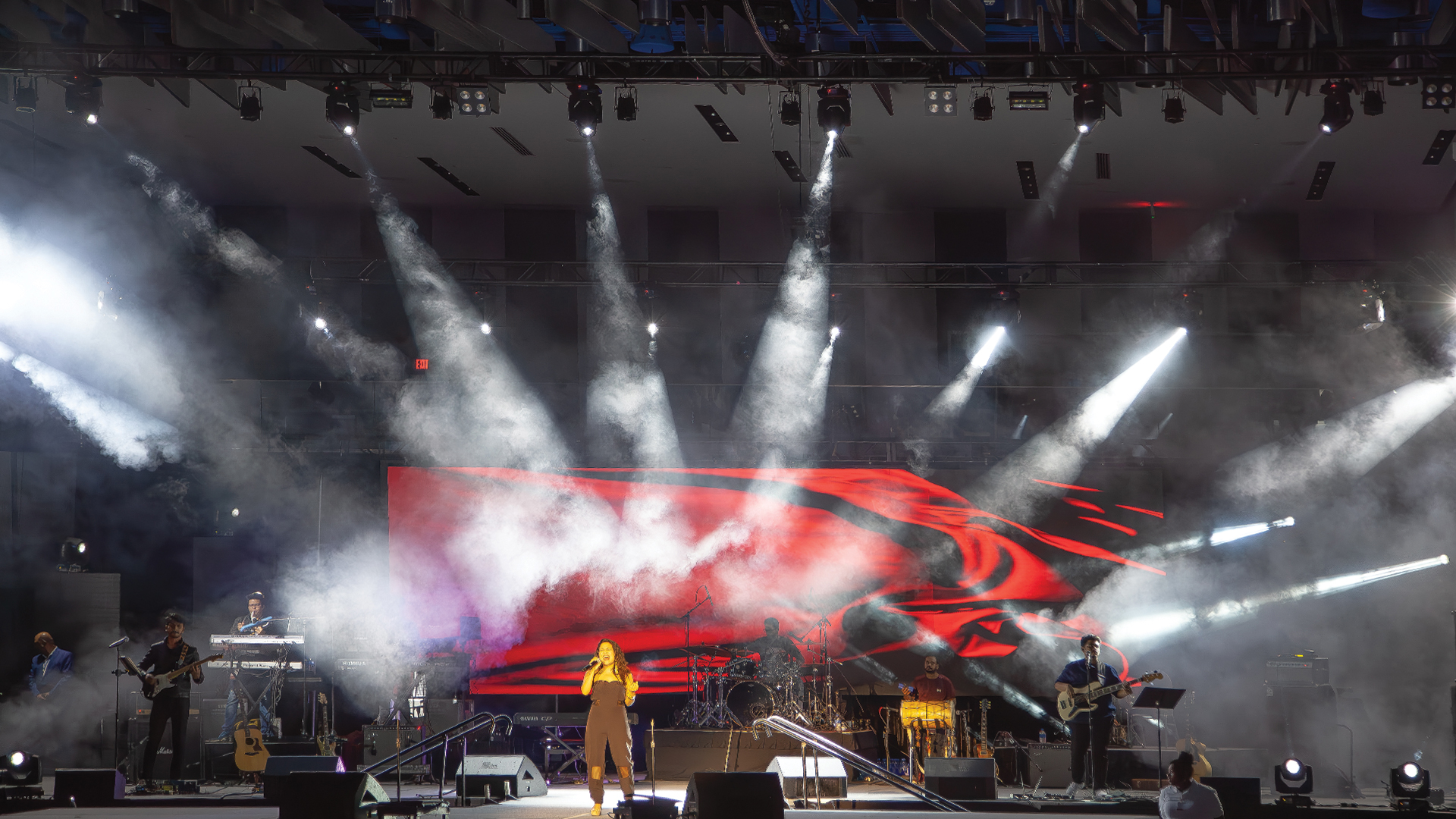
Productions like Harry Styles’ Love on Tour, Billie Eilish’s Happier Than Ever World Tour, and numerous Dua Lipa and The Weeknd productions integrated Astera Titan Tubes into custom scenic elements — grid structures, hanging mobiles, floor troughs — creating organic, three-dimensional light environments that conventional hard-wired fixtures could not replicate without massive cable management infrastructure. The eight-hour runtime means that most standard touring show schedules — including load-in power tests, full dress rehearsals, and the performance itself — fall within a single charge cycle.
AsteraApp and Software Integration
Astera’s AsteraApp — available for iOS and Android — provides standalone wireless control for up to 40 fixtures without any additional hardware, making it the fastest deployment option for small corporate events and press shoots where a dedicated lighting console is impractical. For larger productions, the app serves as a setup and diagnostic tool complementing professional console control, with capabilities including battery status monitoring across all network fixtures, wireless address assignment, color calibration, and firmware updates pushed over Wi-Fi
The Astera RF transceiver system — particularly the ARC3 transmitter — provides a proprietary 2.4GHz control link with robust noise immunity in the crowded RF environments that characterize large events. At productions where hundreds of wireless lighting fixtures, in-ear monitor systems, RF video links, and walkie-talkie networks compete for spectrum, Astera’s frequency-hopping protocol maintains fixture response latency below 10 milliseconds — fast enough for tempo-synchronized programming at 140 BPM without perceptible visual lag.
Battery Management as Production Discipline
Deploying wireless LED systems at scale demands a battery management discipline that wired-fixture veterans find counterintuitive. A production deploying 200 Titan Tubes must maintain a charging inventory cycle that ensures all fixtures arrive at full charge without the pre-show scramble of discovering depleted units. Leading production houses operating Astera fleets have developed rack-charging systems using custom 16-unit charging bays from fabricators like Absolute Casing, allowing full fleet charges to complete within the 3-hour overnight window between a load-out and the following day’s setup.
The Astera ecosystem represents more than a product range — it has catalyzed a fundamental rethinking of event lighting infrastructure. In an industry where a single cable failure can cost hours of labor and potentially compromise a show, the promise of removing power distribution from the critical path of event production carries value that transcends per-unit hardware cost. The wireless future that Astera effectively created is now the expectation rather than the innovation, and the fixtures carrying that mission continue to appear on riders from Seoul to São Paulo to Stockholm.
