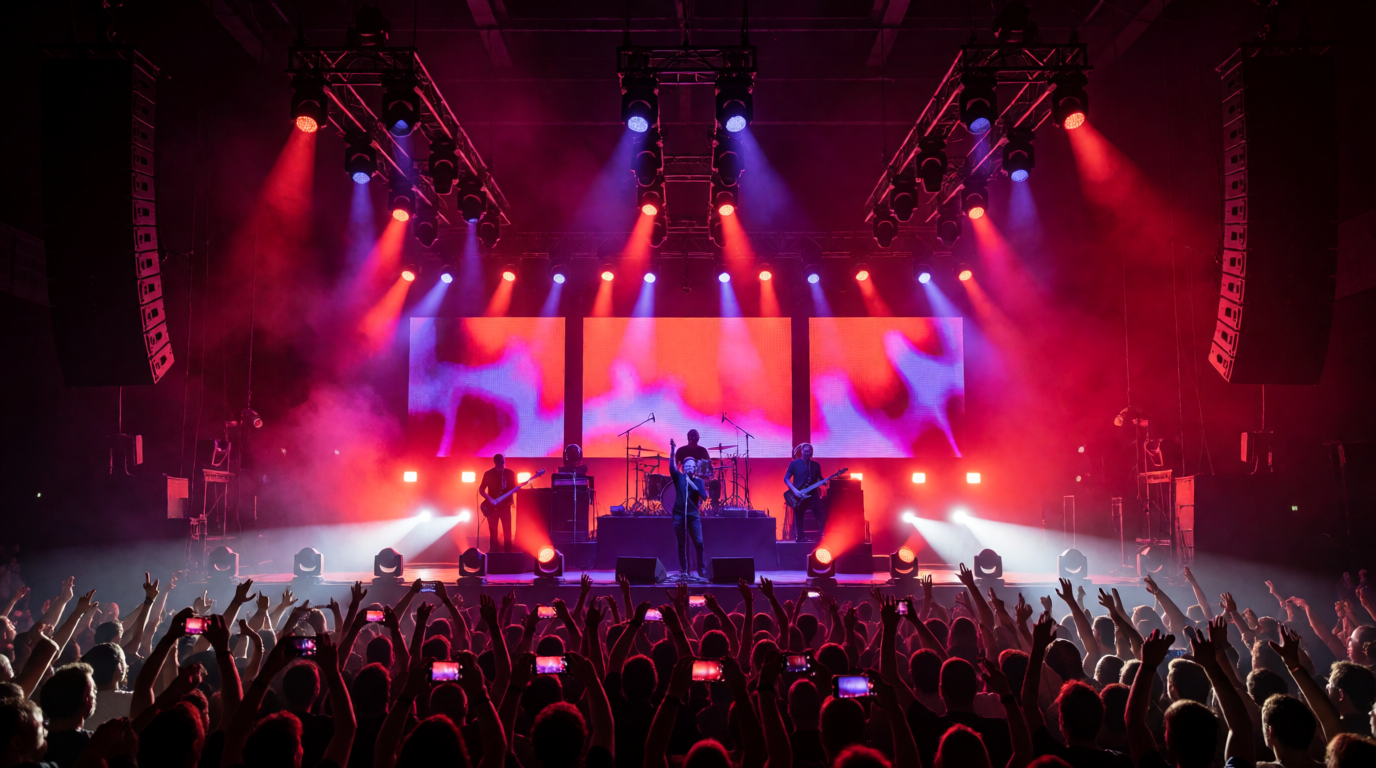
A cold-fog effect, a humid tent and a cloud that decided to float at head height.
Low-lying fog is the most romantic effect in theatre. It pools around dancers’ ankles, rolls off the apron and makes a stage look like a midnight meadow. It is also temperamental, obeying the laws of temperature and humidity far more than any lighting cue. This is the story of an event where the fog refused to settle, and of the crew that had to teach a cloud some manners.
The Dream of the Ground Mist
Ground fog has a long theatrical pedigree. Dry ice, solid carbon dioxide, has been used on stage since at least the early twentieth century, dropped into warm water to produce a cold, heavy mist that hugs the floor. Productions like *Phantom of the Opera* made the effect part of their identity, and generations of designers have chased it ever since.
Today, machines from Look Solutions, Antari, Martin Professional and Chauvet produce low-lying fog by chilling the output of a standard fogger, either through ice-filled chambers or refrigeration. The Antari ICE Q line and the Look Solutions Cryo-Fog products are well-known examples. The effect works because cold fog is denser than the surrounding air, so it sinks.
The Brief
The event was a wedding-scale corporate gala in a large marquee, with a dance floor, a live band and a first dance moment the client wanted drenched in ground mist. The lighting designer, a thoughtful woman named Marit, specified two Antari ICE-101 chillers and a Look Unique 2.1 haze machine to create a layered atmosphere.
She rehearsed the effect in the warehouse and it was perfect. The fog crept like a tide. The haze above it caught the beams of her Robe Pointe fixtures. The client signed off on a photo and left for dinner.
The Humid Surprise
On the day, the marquee was baking. A hot afternoon had soaked the tent canvas with sunshine, and a hundred guests added body heat and moisture. When Marit fired a test burst, the fog rose like a startled ghost, drifting waist high and then head high. The beautiful carpet of mist became a floating cloud.
The cause was thermodynamics. For fog to sit low, it needs to be colder than the surrounding air. The marquee’s air was about thirty degrees Celsius, humid and still. The chiller’s output, even cold, warmed up quickly as it mixed with the surrounding air, and its density dropped. Once it matched the air, it rose.
- Measure air temperature and humidity with a handheld meter before programming effects.
- Keep ambient temperature as low as possible with air conditioning or ventilation.
- Use ice or dry ice chambers for stronger cooling when ambient air is warm.
- Place machines close to the floor and aim output downward.
Technique: Cold Chain Management
Marit called the shop and requested two bags of dry ice and a pair of insulated pellet bins. When they arrived, she used a technique that theatres have used for decades: a water-and-dry-ice fog chiller built from a heated water bath and a fan. The warm water reacts with the carbon dioxide to produce a thick, heavy fog, much colder than any machine output.
She combined it with the standard fog. Fog from the Antari chiller flowed through a length of flexible ducting into the dry ice bath, then out through a low-profile outlet near the dance floor. The hybrid technique produced a mist that dropped and stayed.
Another trick was to reduce air movement. The marquee’s side flaps had been opened for ventilation, and breezes were stirring the fog. Marit asked the venue team to lower the flaps and turn off one fan. The mist settled like a cat on a cushion.
Safety and Carbon Dioxide
Dry ice brings its own responsibilities. Carbon dioxide is heavier than air and can accumulate in low spaces, displacing oxygen. A crowded tent with poor ventilation can become uncomfortable or dangerous. Marit measured CO2 levels using a handheld gas monitor and placed a stagehand at the dry ice station with instructions to stop the effect if readings rose.
She also briefed the venue manager and the fire marshal. The safety data sheet for the fog fluid and the dry ice handling instructions were printed and taped inside the lighting booth. Professionals in this field treat atmospheric effects like pyrotechnics: they plan, document and ask for approval.
- Handle dry ice with insulated gloves; never touch it with bare skin.
- Never store dry ice in a sealed container; it expands as it sublimates.
- Monitor CO2 levels in enclosed spaces.
- Keep the effect area clear of children and pets.
The First Dance
When the bride and groom stepped onto the dance floor, the lights dimmed. Marit pressed a grandMA3 macro called “Cloud Nine.” The fog rolled out from the base of the stage and spread across the floor like a silk sheet. The couple moved through it, ankle deep in mist, while a hundred guests held up phones.
It was the best photograph of the evening. The client sent a thank-you note the following morning, and a bonus that Marit used to buy a better thermometer.
Software for Smoke
Lighting software has made atmospherics easier to manage. Fog machines accept DMX control, and many support timed bursts and fan control. Marit built a small fog engine in the console using effect engines to pulse the machines in rhythm with the music. She also linked the fog cues to the timecode of the first dance song, so the cloud would deepen as the chorus arrived.
Previsualisation software like Capture and WYSIWYG now simulates fog density and haze behaviour, but real-world testing remains essential. Digital fog does not know about humidity.
Business Insights: Atmosphere as Service
The gala taught the production company a quiet business lesson: special effects deserve their own service tier. Clients often treat fog as a line item worth a few hundred dollars. In truth, a safe, reliable atmospheric effect requires equipment, fluids, a technician, safety planning and sometimes extra rentals like dry ice, ducting and monitors.
The company created an Atmosphere Package with three levels: haze, fog and cold fog with dry ice. Each level includes a site survey, safety documentation and a dedicated operator. Prices reflect the real labour. Clients appreciated the clarity, and margins improved.
They also began recording environmental conditions before every event, building a small database of temperature, humidity and results. Over a year, the data revealed patterns that helped them predict which venues needed extra cooling and which could rely on machine output alone.
The Takeaway
Fog that refuses to settle is not defiance. It is physics asking for attention. Measure the air, chill the effect and calm the room. With a little engineering and a sense of humour, even a stubborn cloud will lie down at the dancers’ feet. And when the bride’s veil moves through the mist like a dream, remember that somewhere behind the curtain, a lighting designer is checking a thermometer and smiling.
